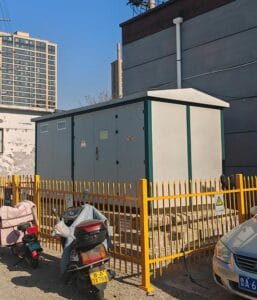
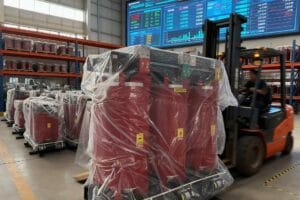
Power systems today are built around one simple expectation: stability without compromise. Whether it is a data center running nonstop workloads, an industrial plant operating heavy machinery, or a commercial complex managing critical infrastructure, the transformer at the heart of the system must perform consistently under pressure.
Dry type transformers have gradually become a preferred choice in these environments, not because of a trend, but because of practical engineering advantages—safety, adaptability, and reduced maintenance dependency.
This article is written from a manufacturing and engineering perspective, focusing on how dry type power transformers are actually designed, built, selected, and applied in real projects.
Оглавление
Understanding Dry Type Power Transformers in Real Applications
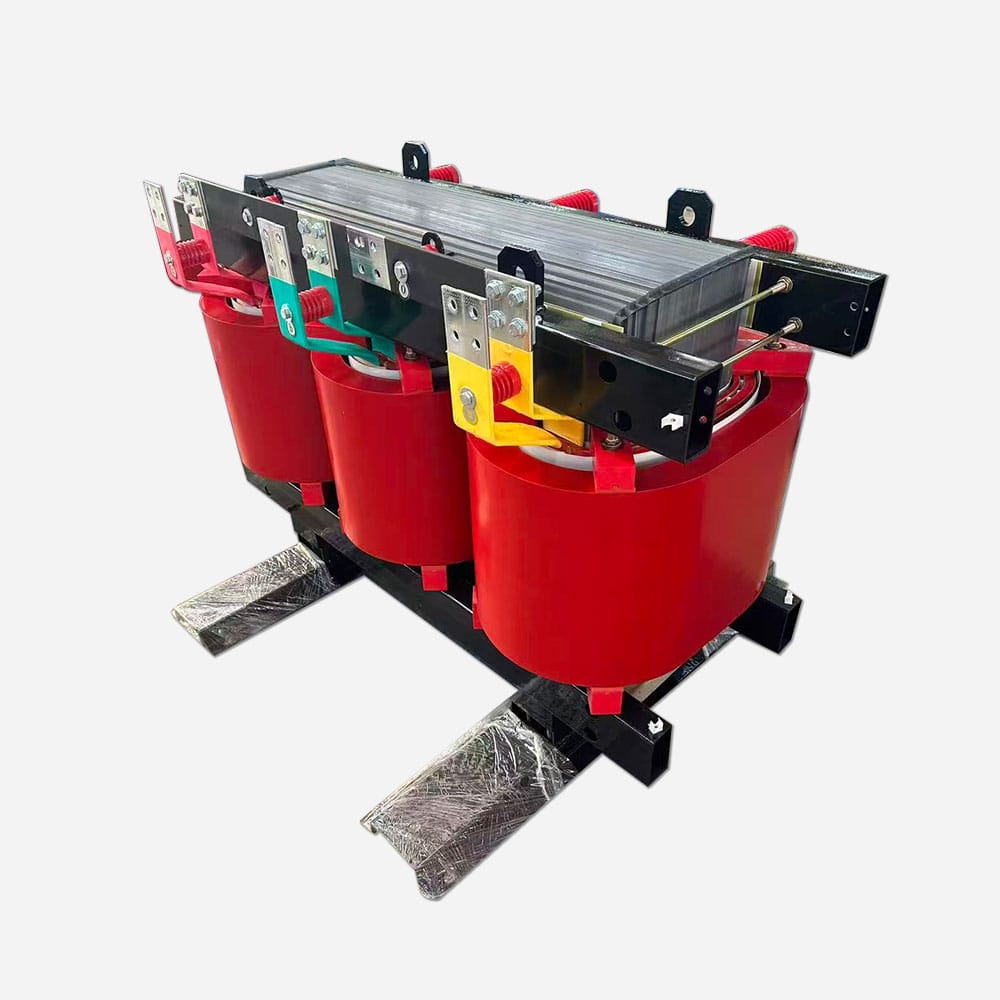
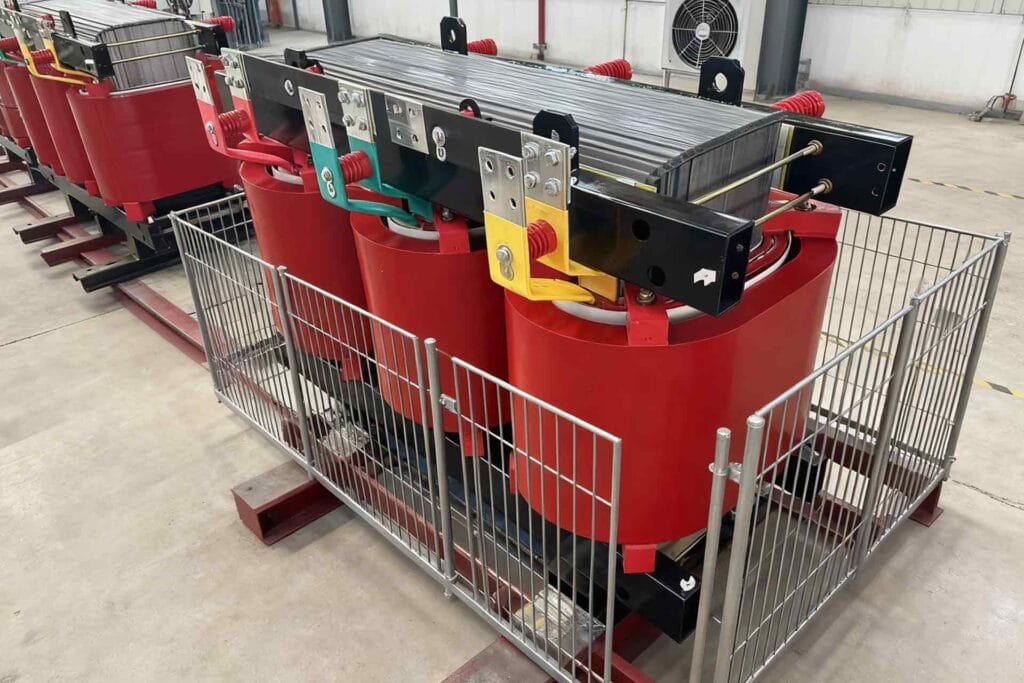
A dry type power transformer is a static electrical device that transfers energy between circuits through electromagnetic induction, without using insulating oil. Instead, it relies on air and solid insulation systems such as epoxy resin or vacuum-impregnated materials.
In real-world applications, the design choice is not just about “oil-free vs oil-filled.” It is about environmental constraints, fire safety requirements, and long-term operational stability.
What makes dry type transformers widely adopted today is not complexity, but practicality:
- They can be installed closer to load centers
- They reduce fire-related engineering risks
- They are suitable for enclosed electrical rooms
- They perform reliably in sensitive infrastructure environments
From a system design point of view, they are often selected when safety regulations or installation space limitations become defining factors.
How the Energy Conversion Process Actually Happens
Inside a dry type transformer, energy transfer is governed by electromagnetic induction, but the engineering behind it is more structured than it appears.
When alternating current flows through the primary winding, a magnetic field is generated in the laminated core. This field induces voltage in the secondary winding, allowing power transfer without direct electrical connection.
The key engineering focus is not the principle itself, but how efficiently and safely it is controlled:
- Core material is optimized to reduce energy losses
- Winding geometry is designed to handle thermal stress
- Insulation layers are engineered for long-term dielectric stability
- Cooling pathways are designed for continuous airflow
Unlike simplified explanations, real transformer performance depends heavily on how these elements interact under variable load conditions.
Manufacturing Perspective: What Determines Real Quality
From a production standpoint, dry type transformers are not defined by appearance, but by internal precision.
Core system engineering
High-grade silicon steel sheets are processed and stacked to form a low-loss magnetic path. Even minor misalignment can increase no-load losses over time.
Winding structure control
Windings are tightly controlled in terms of tension, layering, and spacing. This directly affects short-circuit resistance and thermal endurance.
Insulation technology
Two mainstream methods are used in industrial production:
- Vacuum Pressure Impregnation (VPI), where resin penetrates winding layers
- Cast resin encapsulation, where windings are fully embedded in epoxy structures
Each method serves different operating environments, particularly in terms of humidity resistance and thermal behavior.
Final verification stage
Before delivery, units typically undergo multiple validation steps such as:
- Insulation strength testing
- Temperature rise monitoring
- Partial discharge checks
- Load simulation under controlled conditions
These tests are not formalities; they define whether the transformer can perform reliably in real systems.
Why Dry Type Transformers Are Increasingly Used in Modern Infrastructure
The shift toward dry type systems is largely driven by changes in infrastructure design philosophy.
Modern projects prioritize:
- Reduced fire risk in enclosed environments
- Lower environmental impact during operation
- Easier integration into compact electrical rooms
- Stable performance in densely populated buildings
In many installations, especially indoor substations, the absence of liquid insulation removes an entire category of safety and compliance concerns.
This is one of the reasons dry type transformers are now commonly seen in:
- High-rise commercial buildings
- Industrial automation systems
- Transportation power networks
- Renewable energy integration facilities
Cast Resin and VPI Systems: A Practical Comparison
Instead of focusing on theoretical differences, it is more useful to look at how each system behaves under real conditions.
Cast resin designs fully encapsulate windings in epoxy. This creates strong resistance against moisture and airborne contaminants, making them suitable for demanding indoor environments.
VPI systems, on the other hand, allow resin to penetrate winding layers without full encapsulation. This gives the structure more flexibility under thermal cycling conditions.
In practice, selection is usually influenced by:
- Environmental humidity levels
- Ventilation conditions
- Load fluctuation intensity
- Maintenance accessibility expectations
Both technologies are mature. The decision is typically application-driven rather than performance-driven.
Where Dry Type Power Transformers Are Commonly Applied
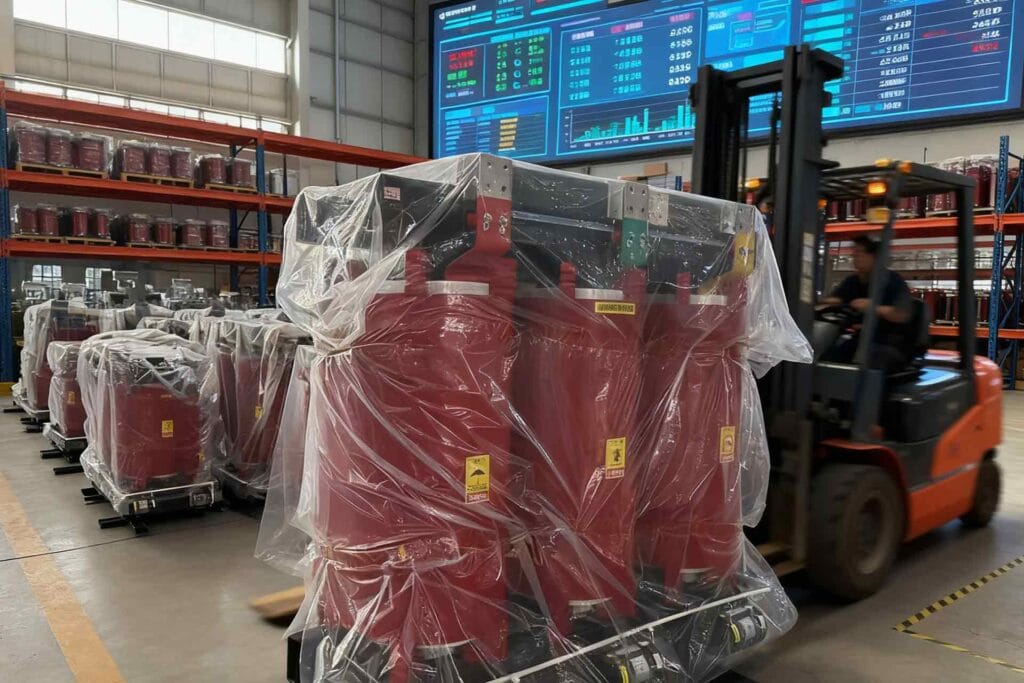
Instead of treating applications as a list, it is more accurate to view them as system categories.
Continuous digital infrastructure
Data centers rely on stable and clean power distribution, where downtime tolerance is extremely low.
Industrial load environments
Factories with motors, drives, and automation systems require transformers that can handle fluctuating demand without instability.
Urban infrastructure systems
Substations in dense urban areas prioritize safety and space efficiency over traditional oil-based solutions.
Energy transition systems
Renewable installations often integrate dry type transformers due to environmental and operational constraints.
Critical service facilities
Hospitals and transportation hubs require stable and predictable electrical performance under all conditions.
Selection Logic Used in Engineering Projects
Choosing a dry type transformer is not a catalog-based decision. It follows system-level analysis.
Key evaluation considerations include:
- Load characteristics over time, not just peak demand
- Compatibility with upstream and downstream electrical systems
- Installation environment constraints such as ventilation and humidity
- Harmonic distortion levels in modern power networks
- Future scalability requirements of the electrical system
A properly selected transformer is not just a component—it becomes part of the system’s stability strategy.
Operational Behavior and Maintenance Reality
Dry type transformers are often described as low-maintenance, but in engineering practice, “low” does not mean “zero.”
Over time, systems may experience:
- Thermal accumulation in high-load conditions
- Dust buildup affecting airflow efficiency
- Natural insulation aging under electrical stress
- Mechanical vibration caused by electromagnetic forces
Maintenance practices typically focus on:
- Periodic thermal inspection
- Insulation condition monitoring
- Airflow path cleaning and verification
- Load balance adjustments within the system
These steps are not complex, but they are essential for long-term stability.
Why Manufacturing Source Matters More Than Product Specification
In industrial procurement, two transformers with similar specifications can behave differently in real operation. The difference usually comes from manufacturing consistency.
Working directly with a manufacturing source typically provides:
- Better control over material selection
- More stable production quality
- Engineering customization for project-specific requirements
- Technical documentation aligned with system integration needs
- Consistent testing standards across production batches
In large-scale electrical projects, these factors often have more impact than nominal specifications alone.
International Standards Used in Transformer Engineering
Most industrial-grade сухие трансформаторы are designed according to internationally recognized standards, including:
- IEC transformer performance frameworks
- ISO quality and environmental management systems
- Electrical insulation and thermal classification standards
- Global testing protocols for dielectric strength and efficiency
These standards ensure that equipment can operate reliably across different regions and electrical systems.
Заключение
Dry type power transformers are no longer a niche alternative. They have become a core part of modern electrical infrastructure where safety, stability, and environmental adaptability are essential.
From manufacturing precision to system-level selection and long-term operation, each stage contributes to performance in real conditions. The most reliable results are achieved when engineering design, production control, and application requirements are aligned from the beginning.
As electrical systems continue to evolve toward higher density and stricter safety expectations, dry type transformer technology will remain a foundational solution across industrial, commercial, and infrastructure sectors.
ЧАСТО ЗАДАВАЕМЫЕ ВОПРОСЫ
What is a dry type power transformer used for?
A dry type power transformer is used for voltage conversion in indoor and safety-sensitive environments such as data centers, commercial buildings, and industrial plants.
What is the main advantage of a dry type transformer?
Its key advantage is high safety performance, as it does not use insulating oil, reducing fire risk and environmental concerns.
How long does a dry type power transformer last?
Service life typically depends on operating conditions and maintenance, but well-designed units can operate reliably for decades.
What is the difference between cast resin and VPI dry type transformers?
Cast resin transformers fully encapsulate windings in epoxy for higher protection, while VPI transformers use resin impregnation for improved thermal flexibility.
Do dry type transformers require regular maintenance?
Yes, but maintenance is relatively simple, mainly involving cleaning, insulation checks, and ventilation inspection to ensure stable performance.