
جدول المحتويات
A ventilated dry type transformer depends on its surrounding air and on a room arrangement that remains workable after installation. The procurement decision should therefore include ventilation, dust exposure, enclosure selection and maintenance access. Treating airflow as a building issue to resolve later can undermine an otherwise reasonable electrical selection.
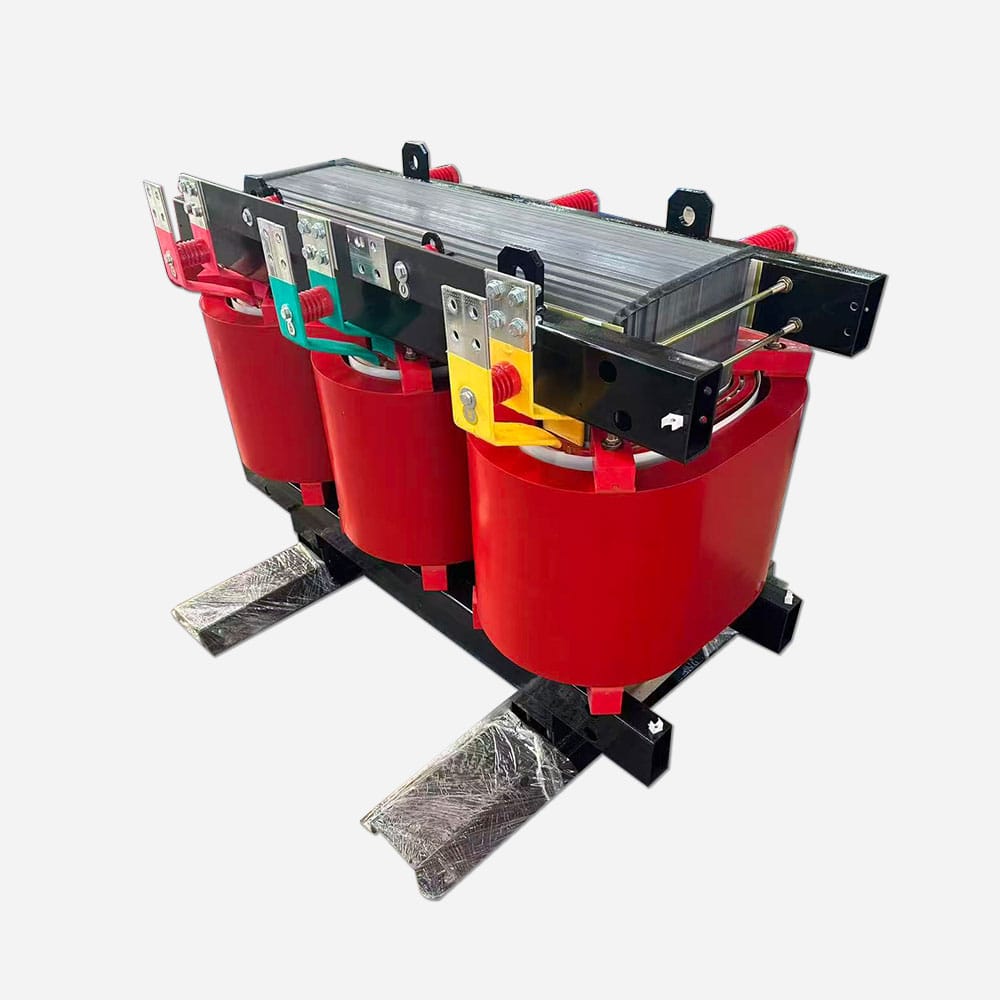
Ventilated Dry Type Transformer: Describe the air that reaches the equipment
Provide site temperature, contamination and humidity information, including process-related conditions near the installation. A ventilated dry type transformer should not be selected on an outdoor ambient value when the room contains other significant heat sources. Ask the supplier to state the service conditions covered by its proposal and identify any filtering or enclosure assumptions that affect the rating.
Keep air routes visible on the layout
Coordinate inlets, outlets and potential obstructions with the building services team. Cable trays, storage and later partitions can all change the intended airflow. For a ventilated dry type transformer, require a layout that shows the manufacturer's relevant clearances and the room ventilation concept. An opening in a wall is not by itself evidence that the heat can leave under the design condition.
Make cleaning and inspection practical
Ask for the equipment-specific maintenance requirements and ensure the operating team can carry them out under approved isolation procedures. A ventilated dry type transformer may be exposed to accumulated dust in ways that the site owner must manage. Define inspection responsibility and recordkeeping at handover. The maintenance plan should reflect the real environment rather than a generic interval copied from another facility.
Check the heat path through the complete installation
Every watt of loss must eventually leave the equipment and its surrounding space. Ask for losses at the stated reference conditions, the cooling arrangement and the ambient assumptions used for the offered rating. The temperature at a weather station may differ from the air entering an enclosure, especially beside a hot process, under a roof or in a sun-exposed yard. Record the installation conditions separately from the standard service conditions in a catalogue.
Ventilation drawings should show the actual inlet and outlet routes, obstructions, filters and the possibility of hot air returning to the inlet. Adding a fan is not a complete thermal design. It also introduces auxiliary power, controls, maintenance access and an operating condition after fan failure. Discuss whether an alarm, a reduced permissible load or a controlled shutdown is required for the particular equipment and process.
For a ventilated dry type transformer, review the assembled arrangement rather than assuming a rating for an open component also applies inside a selected enclosure. Ask for the applicable verification or thermal assessment and its limits. Keep temperature monitoring useful by defining who receives an alarm, how it is recorded and what approved response follows. A sensor without an action owner adds data but may do little to protect continuity.
Treat the enclosure and room as part of dry-type selection
A dry-type transformer rejects heat to its surrounding air. The winding construction does not remove the need to manage dust, condensation, ventilation and access. Ask the supplier to confirm the proposed enclosure and the environmental conditions covered by its design. An outdoor location usually requires more consideration than placing an indoor unit under a roof, especially where driven rain, salt or dust can reach the equipment.
Identify how intake openings will remain clear and how maintenance staff will inspect the unit after installation. A dense room layout can create a recirculation path that is invisible in a simple floor plan. Coordinate the building ventilation assessment with the transformer losses and the actual enclosure. For a noise-sensitive project, request an agreed sound specification and consider the room's effect rather than relying on a vague 'low noise' description.
When specifying a ventilated dry type transformer, distinguish a winding insulation class from an approved temperature-rise limit or a loading permission. Those terms are related but not interchangeable. Ask for the applicable rating, monitoring arrangement and manufacturer's operating limits. Any fan-assisted capacity should be stated separately with its conditions and auxiliary requirements, so the base duty remains clear if forced cooling is unavailable.
Prepare the operating team before energization
Handover should leave the owner able to identify, operate and maintain the delivered equipment within its approved limits. Collect the final drawings, serial-number register, manuals, test records and relevant protection settings. Reconcile them against the installed arrangement rather than filing the original tender documents as if nothing changed during manufacture or construction.
Define training around the actual equipment and the owner's authorised operating procedures. Operators need to understand the meaning of indications, alarms and permitted operating states. Establish escalation contacts and a method for recording abnormal conditions. Any commissioning or switching work must be planned and performed by qualified personnel using the applicable isolation and safety procedures.
For a ventilated dry type transformer, close the project with a list of remaining obligations, warranty dates and recommended maintenance tasks. Make responsibility for periodic review explicit, especially after load changes or network modifications. A handover record should support future decisions rather than serve only as a signature page. Retaining the design assumptions helps the owner identify when the original selection needs to be reassessed.

Worked procurement scenario
Illustrative planning example. A transformer room beside a dusty process is proposed with a simple louvred opening. Before approving the arrangement, the team reviews contamination, heat rejection and the maintenance burden together. An apparently inexpensive ventilation solution may be unsuitable if it introduces conditions outside the equipment's agreed operating envelope.
Turn this scenario into a project decision by assigning an owner to each unresolved item. The electrical designer confirms the network assumptions; the supplier identifies the offered configuration; and the site team checks access and connection readiness. Record the drawing revision behind the agreement. If any one of those inputs changes, return the affected item to review instead of relying on the previous approval.
Compare the decision evidence
Use the following comparison when reviewing ventilated dry type transformer proposals. The right-hand column describes an assumption to challenge, rather than an acceptable alternative specification.
| Decision | Evidence to request | Common mistake |
|---|---|---|
| Intake conditions | Room and process environment data | Using weather temperature only |
| Air route | Ventilation and layout review | Ignoring recirculation or blockage |
| Maintenance access | Supplier instructions and owner plan | Installing an inaccessible unit |
Apply the comparison to each bidder on the same revision of the enquiry. A response marked “included” is only useful if the quotation, drawing or document register identifies what is included. Separate an open technical question from a priced exclusion. That distinction helps procurement compare the actual scope and keeps an attractive initial price from concealing work that the project must still fund.
Prepare a focused project enquiry
Start with the محول راتنجات الإيبوكسي من النوع الجاف product page and the broader محول الطاقة range. Treat the published page as a starting point for discussion; obtain project-specific drawings, ratings, accessories and delivery scope before committing to the order.
Send Shandong Dedication Electric your single-line diagram, site conditions, required quantity and target delivery window. For a ventilated dry type transformer, also highlight intake conditions, air route, maintenance access. Ask for an itemised technical response with deviations identified, so the engineering and purchasing teams can review the same proposed configuration.
If the package forms part of a larger installation, discuss the boundary with the company’s electrical engineering and EPC services. Equipment supply, civil work, installation, testing and utility coordination should each have a named owner. A product image or a catalogue description cannot establish that those activities are included in the quoted price.
Related enquiries may use terms such as dry type power transformer and dry type distribution transformer. Keep the terminology aligned with the same equipment schedule: similar search terms do not remove differences in rating, construction, environment or contractual responsibility.
For the applicable technical framework, consult the official IEC 60076-11 publication listing. Confirm the edition, amendments and local adoption required by the project with the responsible engineer. Referencing a standard here is not a claim that any pictured product has a particular certification, classification or test result.
الأسئلة المتداولة
What information matters most when evaluating a ventilated dry type transformer?
Begin with intake conditions. Request this evidence: Room and process environment data. Identify who approves it and challenge the assumption described as ‘Using weather temperature only’. Keep the agreed requirement traceable to the quotation and the equipment schedule.
Which evidence helps compare options for a ventilated dry type transformer?
Review this evidence alongside the offered scope: Ventilation and layout review. For air route, check the assumptions, limitations and revision status rather than relying on a brief catalogue statement. Ask each bidder to answer against the same project conditions.
What issue is easy to miss when evaluating a ventilated dry type transformer?
Pay attention to maintenance access. Request this evidence: Supplier instructions and owner plan. Challenge this potential mistake: Installing an inaccessible unit. An unresolved obligation can otherwise pass to the site team after the order has already been placed.
Is a catalogue enough to evaluate a ventilated dry type transformer?
No. The offered equipment still needs confirmation of its electrical duty, installation environment and connection interfaces. Obtain the configuration offered for the actual project, identify any deviations and ask the responsible engineering team to approve them before manufacture or release.
What should a quotation request include?
For an enquiry concerning a ventilated dry type transformer, send the project drawings, quantity, location, service conditions and delivery target, together with the priorities in this room airflow and maintenance discussion. Request a technical schedule and a clearly itemised scope. Commercial acceptance should follow resolution of the material technical questions.


