جدول المحتويات
Why Are More Power Projects Choosing Box Type Substations Instead of Traditional Substations?

Ten years ago, large conventional substations were still the default choice for many industrial and infrastructure projects. Today, the situation looks very different.
From renewable energy developments and industrial parks to transportation networks and urban utility projects, engineers are increasingly turning to box type substations as a practical alternative.
The reason is simple: modern projects are expected to move faster, occupy less space, and operate with greater reliability.
A power distribution solution that once required months of civil construction can now be delivered as a factory-assembled unit ready for installation.
This shift is changing the way electrical infrastructure is designed around the world.
The Real Value of a Box Type Substation Is Not What Most People Think
When people first hear about a box type substation, they often focus on its compact structure.
Space-saving design is certainly important, but it is not the primary reason behind its growing adoption.
The real advantage lies in integration.
Instead of treating transformers, switchgear, protection devices, and control systems as separate installations, a box type substation combines them into a single engineered system.
This approach reduces coordination challenges during project execution and creates a more predictable installation process.
For EPC contractors, this means fewer on-site variables.
For project owners, it often means shorter commissioning periods.
For maintenance teams, it simplifies future operation and inspection work.
What Happens Inside a Box Type Substation?
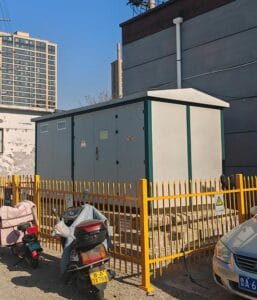
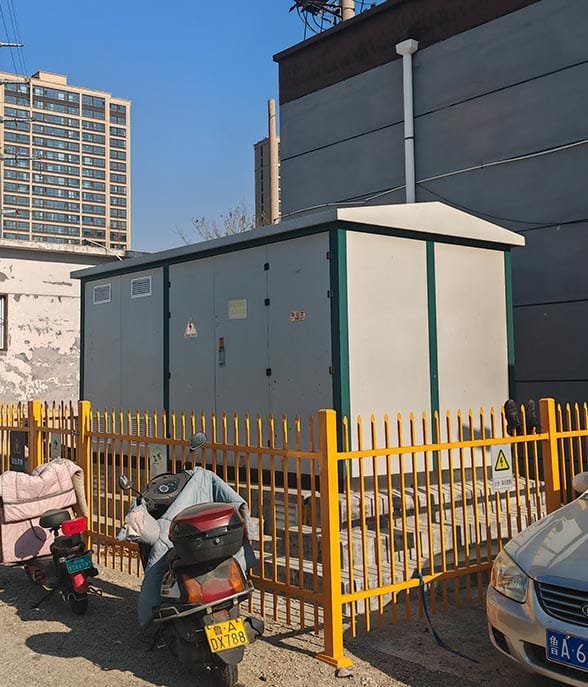
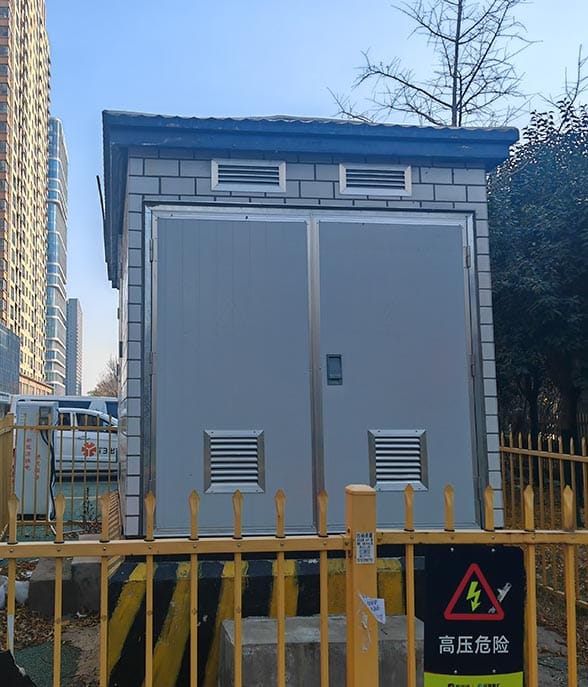
From the outside, a محطة فرعية من النوع الصندوقي may appear to be a simple enclosure.
Internally, however, it performs several critical functions simultaneously.
A typical unit includes:
- مجموعة المفاتيح الكهربائية ذات الجهد العالي
- Distribution transformer
- مجموعة المفاتيح الكهربائية ذات الجهد المنخفض
- Protection systems
- Metering equipment
- Monitoring devices
Electricity enters through the high-voltage section, passes through the transformer for voltage conversion, and is then distributed through the low-voltage network.
The entire process is monitored continuously to ensure stable operation and fault protection.
This integrated workflow is one reason why box type substations are widely used in projects where reliability cannot be compromised.
Why Renewable Energy Projects Depend on Box Type Substations

One of the strongest growth drivers for the box type substation market is renewable energy.
Solar farms and wind power facilities face unique challenges.
They are often located in remote environments.
Construction schedules are usually tight.
Future expansion may be required.
Traditional substations are often less adaptable to these conditions.
A modular محطة فرعية من النوع الصندوقي offers a more flexible solution.
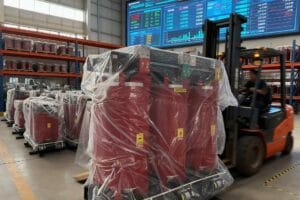
Because major components are assembled and tested before shipment, installation work in the field can be significantly reduced.
For renewable energy developers, this helps accelerate grid connection and project commissioning.
As global investment in renewable energy continues to increase, the role of compact substations is expected to become even more important.
The Question Every Engineer Eventually Asks: How Much Customization Is Really Necessary?
No two power distribution projects are identical.
Yet many buyers initially search for a standard solution.
In reality, most successful projects require some level of customization.
Factors that influence substation configuration include:
Incoming Voltage Requirements
Different utility networks operate at different voltage levels.
Selecting the correct configuration is essential for system compatibility.
Load Characteristics
Industrial facilities, commercial buildings, and utility projects all have different load profiles.
Understanding future expansion plans is equally important.
الظروف البيئية
Substations installed in coastal areas, deserts, mining operations, or high-humidity regions often require specialized protection measures.
Site Limitations
Space restrictions frequently influence enclosure dimensions and equipment arrangement.
This is why experienced manufacturers typically begin with application requirements rather than product specifications.
Common Mistakes That Create Problems Years Later
Many substation issues do not originate from equipment failure.
They originate during the planning stage.
Some of the most common mistakes include:
Choosing Based Only on Current Load Demand
Future expansion is often overlooked.
This can create capacity limitations that become expensive to address later.
Ignoring Environmental Conditions
Dust, moisture, salt spray, and temperature extremes can significantly affect long-term reliability.
Focusing Only on Equipment Selection
The enclosure design itself is equally important.
Ventilation, accessibility, cable routing, and maintenance space all influence operational performance.
Underestimating Maintenance Requirements
Even highly reliable systems require periodic inspection and preventive maintenance.
Planning for long-term serviceability is just as important as initial installation.
Why Manufacturing Quality Matters More Than Technical Specifications
Most manufacturers can provide similar technical data.
The bigger difference often lies in execution.
A well-designed box type substation is the result of hundreds of engineering decisions that are not visible on a specification sheet.
These include:
- Internal equipment layout
- Thermal management design
- Structural reinforcement
- Corrosion protection
- Cable management
- Assembly precision
- Factory testing procedures
When evaluating suppliers, buyers should look beyond product catalogs and examine engineering capabilities, manufacturing processes, and quality control systems.
This is where long-term reliability is often determined.
The Future of Box Type Substations Is Already Taking Shape
The next generation of power distribution infrastructure is becoming smarter.
Across many industries, project owners are seeking greater visibility into system performance.
This has accelerated the adoption of:
- Remote monitoring
- Intelligent protection systems
- Digital communication interfaces
- Predictive maintenance technologies
- Smart grid integration
Future box type substations will not simply distribute power.
They will become active nodes within connected energy networks.
This transformation is already underway in industrial facilities, utility projects, and renewable energy developments.
A Different Way to Evaluate a Box Type Substation
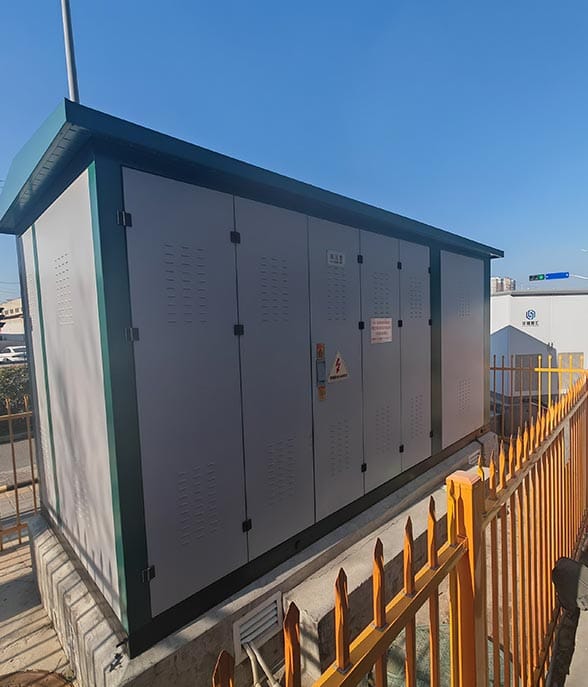
Many buyers compare substations by looking at equipment lists.
Experienced engineers often take a different approach.
Instead of asking:
“Which substation has more features?”
They ask:
“Which solution will perform reliably for the next twenty years under real operating conditions?”
The answer depends on far more than transformer ratings or switchgear specifications.
It depends on engineering design, manufacturing quality, environmental adaptability, maintenance accessibility, and long-term operational support.
That perspective often leads to better project outcomes.
الخاتمة
The growing popularity of the box type substation reflects broader changes happening throughout the power industry.
Projects today demand faster deployment, greater flexibility, improved reliability, and smarter infrastructure solutions. A well-engineered محطة فرعية من النوع الصندوقي addresses all of these requirements while providing a compact and scalable platform for modern power distribution.
For project developers, utility operators, EPC contractors, and industrial facility owners, selecting the right solution is not simply about meeting present-day electrical demands. It is about building infrastructure capable of supporting future growth, operational efficiency, and long-term system stability.
As renewable energy integration, industrial automation, and smart grid technologies continue to expand, the box type substation is expected to remain a critical component in the next generation of power distribution systems.
الأسئلة الشائعة
What is a box type substation?
A box type substation is a compact, prefabricated power distribution unit that integrates high-voltage switchgear, a transformer, and low-voltage distribution equipment into a single enclosure for efficient power transmission and distribution.
Where are box type substations commonly used?
Box type substations are widely used in industrial facilities, commercial developments, renewable energy projects, infrastructure construction, mining operations, and urban power distribution networks.
What are the main advantages of a box type محطة فرعية?
The main advantages include a compact footprint, faster installation, improved safety, reduced on-site construction work, and reliable performance in a wide range of operating environments.
Can a box type substation be customized for specific projects?
Yes. Box type substations can be customized based on voltage requirements, load capacity, environmental conditions, enclosure design, and project-specific technical specifications.
How do I choose the right box type substation for my application?
Key factors include voltage level, power demand, installation environment, future expansion requirements, and compliance with local electrical standards. Working with an experienced manufacturer can help ensure the most suitable configuration for your project.