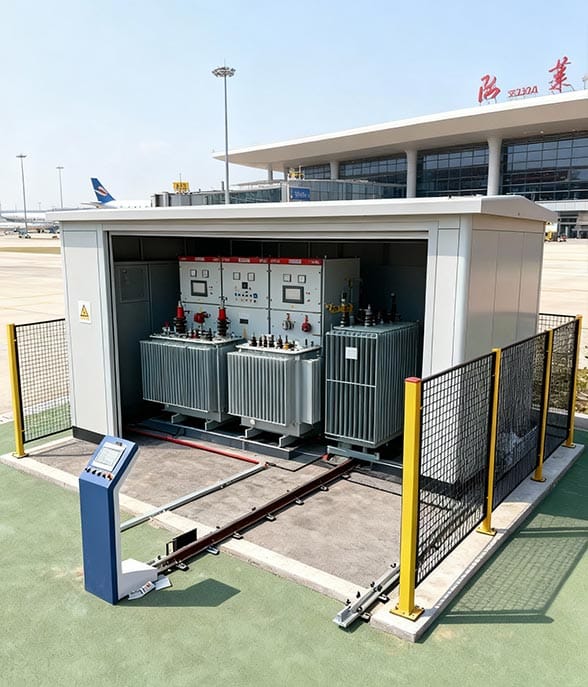
Industrial power systems are changing faster than many project owners expected. A factory that once needed a simple distribution panel may now need more automation, more motor loads, more monitoring points, future solar integration, EV charging capacity, or a safer maintenance layout. In this environment, choosing low voltage switchgear is not just a purchasing decision. It is a design decision that affects reliability, operating safety, maintenance efficiency, and long-term expansion.
For industrial facilities, commercial buildings, municipal infrastructure, renewable energy sites, and EPC power projects, low voltage switchgear sits at the point where power becomes usable for daily operation. It receives electrical energy from transformers or upstream distribution systems, divides power into outgoing feeders, protects circuits from faults, and allows maintenance teams to isolate equipment safely.
This guide explains how to evaluate low voltage switchgear from a practical engineering and procurement perspective. It is written for project owners, electrical contractors, EPC teams, facility managers, and international buyers who need a reliable power distribution solution rather than a generic electrical cabinet.
If you are planning a new project or upgrading an existing distribution room, you can also explore Низковольтные распределительные устройства GCK Drawout from Shandong Dedication Electric Co., Ltd. for modular power distribution applications.
Why Low Voltage Switchgear Matters More Than Many Buyers Realize

Low voltage switchgear is often viewed as a supporting component, but in real operation it becomes one of the most important assets in the electrical room. When the system is correctly selected, operators rarely notice it. When it is poorly selected, problems appear quickly: nuisance tripping, overheating, difficult maintenance, poor expansion capability, unstable motor starting, or unsafe access during inspection.
A good low voltage switchgear system should support three goals at the same time:
First, it must distribute power safely and reliably under normal load conditions. Second, it must protect downstream circuits during abnormal conditions such as overloads or short circuits. Third, it must remain serviceable over many years as the facility changes.
This is why selection should not begin with cabinet appearance or basic price comparison. It should begin with the real operating environment, the load profile, the protection strategy, and future system growth.
Global power infrastructure is also becoming more complex. The International Energy Agency highlights electricity, grids, energy security, and energy transition as key areas in modern energy systems, showing why reliable distribution infrastructure is increasingly important for industrial and clean-energy projects. For a broader energy context, readers can review the International Energy Agency electricity resources.
The First Question: What Type of Load Will the Switchgear Serve?
Before choosing low voltage switchgear, engineers should clearly define the load type. A cabinet used for a general office building is not the same as one used for a manufacturing line, pump station, mining facility, data room, or temporary power project.
Different loads create different electrical behaviors.
Motor loads may require higher starting current tolerance and reliable coordination with protection devices. Automation systems may need stable power quality and clear circuit separation. Industrial heating equipment may create continuous high current demand. Renewable energy or EV charging projects may require flexible feeder arrangements and future expansion space.
For a practical selection process, start with these questions:
What is the total installed load?
What is the expected operating load?
Which loads are continuous, intermittent, or high-impact?
Are there large motors, variable frequency drives, compressors, pumps, or welding equipment?
Will the system need future feeders?
Is the project connected to a transformer, substation, generator, solar system, or temporary power source?
The more accurate the load analysis is, the more suitable the low voltage switchgear design will be.
Fixed Type vs Drawout Type: Which Structure Is Better?
One of the most important decisions is whether to use fixed type or drawout type low voltage switchgear. Both structures can be suitable, but they are designed for different maintenance and operation requirements.
Fixed type switchgear is often used where the circuit structure is relatively simple and maintenance frequency is not high. It can be suitable for basic distribution applications where compact design and stable operation are the main priorities.
Drawout type switchgear offers stronger maintenance convenience. Functional units can often be withdrawn for inspection, replacement, or service, helping reduce downtime during maintenance. This structure is especially valuable in industrial facilities where production continuity matters.
For projects that require flexible configuration and reliable long-term service, Низковольтные распределительные устройства GCK Drawout is a practical option because its modular drawout structure supports flexible distribution needs in large and medium-sized power systems.
| Selection Factor | Fixed Type Switchgear | Drawout Low Voltage Switchgear |
|---|---|---|
| Maintenance access | More limited | Easier unit inspection and replacement |
| Expansion flexibility | Умеренный | Stronger modular flexibility |
| Typical use | Simple power distribution | Industrial and medium-to-large systems |
| Downtime control | Depends on layout | Better for maintenance planning |
| Configuration flexibility | Lower to medium | Выше |
The best choice depends on system complexity, maintenance strategy, and the required level of operational continuity.
Safety Should Be Designed Into the Switchgear, Not Added Later
Electrical safety is not only about personal protective equipment or operating procedures. It begins at the design stage.
A well-designed low voltage switchgear system should provide clear circuit separation, reliable insulation, proper grounding, safe access for inspection, and suitable protection coordination. The cabinet structure should help operators avoid unnecessary exposure to energized components during routine tasks.
For international projects, electrical safety expectations may vary by country, but the core principle remains the same: equipment should reduce risk during installation, operation, maintenance, and troubleshooting.
The NFPA describes NFPA 70E as a workplace electrical safety standard intended to help reduce risks related to shock, electrocution, arc flash, and arc blast. While project standards differ by market, this type of safety guidance shows why power distribution equipment should be selected with maintenance safety in mind. You can read more from the NFPA 70E standard page.
When evaluating low voltage switchgear, ask the supplier or engineering team about:
Grounding design
Protection device coordination
Internal separation
Incoming and outgoing cable arrangement
Maintenance access
Interlocking requirements
Fault isolation strategy
Testing and commissioning procedures
Safety cannot rely only on good operation habits. The cabinet itself must support safe work.
IEC 61439 and Compliance Considerations for Low Voltage Switchgear
For many industrial and international projects, compliance is one of the most important purchasing concerns. Low voltage switchgear should be designed and verified according to applicable local and international requirements.
IEC 61439 is widely recognized in relation to low-voltage switchgear and controlgear assemblies. The IEC system covers requirements such as service conditions, construction, technical characteristics, and verification. Buyers can review the official IEC overview for low-voltage switchgear and controlgear assemblies when preparing technical specifications.
Compliance should not be treated as a simple label. It should be connected with documentation and project requirements, including:
Rated voltage
Rated current
Short-circuit withstand capacity
Temperature rise performance
Insulation level
Protection degree
Internal separation
Installation environment
Testing records
Wiring drawings
For overseas buyers, it is especially important to confirm voltage, frequency, cable entry method, local documentation requirements, and project acceptance standards before production.
Matching Low Voltage Switchgear With Transformers and Upstream Systems
Low voltage switchgear does not work alone. It is part of a complete power distribution chain that may include transformers, high voltage switchgear, power cables, meters, protection devices, and downstream distribution boards.
A common mistake is selecting low voltage equipment without checking upstream transformer capacity or short-circuit levels. This may result in incorrect protection settings, oversized components, or insufficient fault withstand capability.
For example, if a project uses a transformer to step down voltage for industrial operation, the low voltage switchgear should be selected according to the transformer capacity, secondary voltage, fault current level, and outgoing feeder requirements.
If the project also includes medium-voltage distribution, the low voltage system should be coordinated with products such as Высоковольтное распределительное устройство KYN28 or other upstream equipment.
For integrated outdoor or compact power projects, a подстанция ящичного типа may combine high-voltage equipment, transformer, low-voltage distribution, metering, and compensation devices into one engineered solution.
This system-level view is critical. Buyers should not only ask, “Which cabinet should I buy?” They should ask, “How will the entire power distribution system operate?”
Environmental Conditions Can Change the Entire Cabinet Design
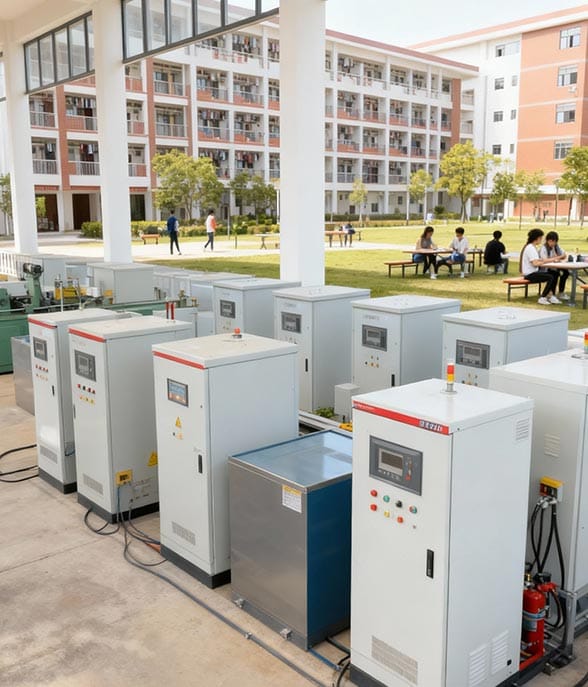
The same low voltage switchgear may perform differently depending on where it is installed. A clean indoor electrical room is very different from a dusty workshop, coastal environment, mining site, construction area, or outdoor temporary power location.
Important environmental factors include:
Ambient temperature
Humidity
Dust level
Corrosive gases
Altitude
Ventilation
Space limitation
Cable trench layout
Внутренняя или наружная установка
Maintenance access
For industrial projects, ventilation and heat dissipation deserve special attention. Even when components are correctly rated, poor heat management can reduce reliability. Cable routing and cabinet spacing should also allow safe operation and future maintenance.
In harsh environments, the cabinet may require stronger enclosure protection, anti-corrosion treatment, special busbar design, better sealing, or additional environmental controls.
Future Expansion: The Most Overlooked Part of Switchgear Selection
Many facilities expand after the first installation. A production line adds more equipment. A warehouse adds EV charging. A factory adds solar power. A commercial building adds backup systems. A municipal project adds more pumps or lighting circuits.
If the original low voltage switchgear has no spare feeder capacity, no cabinet extension space, and no clear documentation, expansion becomes expensive and disruptive.
A better selection strategy is to plan for future change from the beginning.
That does not mean oversizing everything. It means designing enough flexibility into the system. This may include spare outgoing feeders, reserved cabinet positions, modular functional units, accessible cable space, and clear wiring documentation.
Drawout type low voltage switchgear is often useful in this situation because modular functional units make maintenance and configuration changes more manageable.
When discussing a project with a supplier, provide expected future load information whenever possible. If the project may expand within three to five years, the switchgear design should reflect that reality.
Low Voltage Switchgear for Renewable Energy and EV Charging Projects
Renewable energy and EV charging infrastructure create new requirements for power distribution. These projects often involve changing load profiles, higher expectations for monitoring, outdoor or semi-outdoor installation, and coordination with transformers, inverters, protection devices, and grid connection equipment.
Low voltage switchgear in these projects should be selected with attention to:
Bidirectional or complex power flow conditions where applicable
Harmonic influence from power electronics
Protection coordination
Metering and monitoring
Grid connection requirements
Environmental protection
Expansion for additional charging points or energy equipment
The International Energy Agency continues to emphasize the importance of grids and electricity infrastructure in the global energy transition. This makes distribution equipment increasingly relevant in renewable energy, industrial electrification, and clean-energy infrastructure projects. For wider background, see the IEA’s electricity topic resources.
For project owners, the key point is simple: renewable energy and EV charging projects should not use low voltage switchgear as a generic cabinet. They need a coordinated distribution solution.
Common Mistakes When Buying Low Voltage Switchgear
Many switchgear problems start before the equipment is produced. They begin with incomplete specifications, unclear site information, or short-term purchasing decisions.
Here are the most common mistakes to avoid.
Choosing only by cabinet size
Cabinet size matters, but it does not tell you whether the system can handle the required load, fault level, operating temperature, or maintenance needs.
Ignoring short-circuit capacity
A low voltage switchgear system must be matched to the available fault current. Underestimating short-circuit requirements can create serious safety and reliability risks.
Not reserving expansion space
A system that works today may become difficult to upgrade later if no spare feeder capacity or physical extension space is planned.
Forgetting site conditions
Dust, heat, humidity, and poor ventilation can affect performance. Environmental conditions should be shared with the supplier early.
Treating switchgear as separate from the full system
Low voltage switchgear must match transformers, upstream switchgear, cables, protection devices, and downstream loads.
Not asking for drawings and technical documents
Drawings, wiring diagrams, test records, and technical documentation are essential for installation, commissioning, and future maintenance.
A Practical Checklist Before Sending an Inquiry
To get a more accurate low voltage switchgear proposal, buyers should prepare technical information before contacting a supplier.
| Information to Prepare | Почему это важно |
| Rated voltage and frequency | Ensures compatibility with local power systems |
| Total load and operating load | Helps determine rated current and feeder design |
| Transformer capacity | Supports correct incoming design and protection coordination |
| Number of outgoing feeders | Defines cabinet layout and functional units |
| Load type | Affects protection, switching, and configuration |
| Installation environment | Determines enclosure, ventilation, and protection needs |
| Cable entry direction | Impacts cabinet structure and site installation |
| Expansion plan | Helps reserve future capacity |
| Required standards | Supports compliance and documentation |
| Project drawings | Improves accuracy of the final solution |
If your project already has an electrical design drawing, single-line diagram, or load list, send it together with your inquiry. This helps reduce communication time and improves technical accuracy.
You can also review available power distribution equipment products to identify related switchgear, transformers, and substation solutions for your project.
What Makes a Reliable Low Voltage Switchgear Supplier?
The right supplier should do more than quote a cabinet. For industrial and engineering projects, the supplier should understand electrical system coordination, project site conditions, documentation requirements, testing, and long-term maintenance needs.
A reliable supplier should be able to support:
Technical selection
Customized cabinet configuration
Transformer and switchgear coordination
Power distribution system planning
Production quality control
Заводские испытания
Installation guidance
Commissioning support
After-sales service
For EPC projects, municipal power systems, temporary power, and industrial distribution upgrades, this type of support can reduce project risk.
Shandong Dedication Electric Co., Ltd. provides power distribution equipment, power engineering support, EPC solutions, temporary power services, and customized electrical solutions for industrial, municipal, infrastructure, and energy projects. If your project needs technical selection support, you can contact the engineering team with your load information and project requirements.
How to Evaluate a Low Voltage Switchgear Proposal

Once you receive a proposal, do not evaluate it only by the equipment list. A professional review should check whether the proposal matches the project’s real technical needs.
Look carefully at:
Rated current
Rated voltage
Short-circuit withstand capacity
Protection device configuration
Incoming and outgoing feeder arrangement
Cabinet structure
Busbar specification
Metering and monitoring options
Cable entry design
Environmental protection
Compliance documentation
Testing plan
Expansion capacity
Maintenance accessibility
A strong proposal should be clear enough for both procurement and engineering teams. If key information is missing, ask for clarification before approving production.
ЧАСТО ЗАДАВАЕМЫЕ ВОПРОСЫ
What is low voltage switchgear used for?
Low voltage switchgear is used to receive, distribute, control, and protect electrical power in low-voltage power distribution systems. It is commonly used in factories, commercial buildings, substations, infrastructure projects, renewable energy systems, and industrial facilities.
How do I choose the right low voltage switchgear?
Start with the load profile, rated voltage, rated current, short-circuit level, installation environment, feeder quantity, safety requirements, and future expansion plan. A supplier should review these details before recommending a final configuration.
Is drawout low voltage switchgear better than fixed type?
Drawout low voltage switchgear is usually better for projects that require easier maintenance, flexible configuration, and reduced downtime. Fixed type switchgear may be suitable for simpler systems with fewer maintenance and expansion requirements.
What information should I send before requesting a quotation?
You should send voltage and frequency requirements, transformer capacity, load list, single-line diagram if available, outgoing feeder requirements, installation environment, cable entry direction, and any required standards or documentation.
Can low voltage switchgear be customized for overseas projects?
Yes. Low voltage switchgear can be customized according to voltage, frequency, cabinet structure, protection configuration, environmental conditions, cable layout, compliance requirements, and project-specific operating needs.
Заключение
Choosing low voltage switchgear is not only about selecting an electrical cabinet. It is about building a safer, more reliable, and more flexible power distribution system.
The best selection process begins with load analysis, safety requirements, system coordination, environmental conditions, compliance expectations, and future expansion planning. For industrial facilities, EPC power projects, renewable energy sites, municipal infrastructure, and commercial power systems, the right low voltage switchgear can reduce maintenance difficulty, improve operating stability, and support long-term project growth.
If your project requires a customized low voltage switchgear solution, transformer coordination, or complete power distribution equipment support, visit Shandong Dedication Electric Co., Ltd. or send your project requirements to the technical team for selection support.