Оглавление
Введение
An industrial power distribution system is the electrical backbone of a factory, industrial park, renewable energy project, mining site, commercial complex, or infrastructure facility. It receives power from the grid or a generation source, transforms voltage, distributes electricity to different loads, protects circuits from faults, and supports safe operation during daily production.
A well-designed system does not depend on one piece of equipment alone. It requires coordinated selection of high voltage switchgear, power transformers, low voltage switchgear, protection devices, metering systems, cable routes, grounding, and future expansion space.
Shandong Dedication Electric provides power distribution equipment such as Высоковольтное распределительное устройство KYN28, Масляный трансформатор, Низковольтные распределительные устройства GCK Drawout, и Сборная подстанция solutions for industrial and infrastructure projects.
What Is an Industrial Power Distribution System?
An industrial power distribution system is a complete electrical network that delivers usable power from the incoming supply point to production equipment, motors, lighting, HVAC systems, pumps, compressors, charging facilities, and control systems.
In simple terms, it includes three major stages:
Power receiving from the grid, generator, renewable energy system, or upstream substation.
Voltage transformation through a transformer or substation system.
Power distribution through medium-voltage and low-voltage switchgear to different loads.
For a broader technical background, the electric power distribution overview explains how distribution networks deliver electricity from transmission systems to users.
In an industrial project, the system must be more robust than ordinary building distribution because the loads are heavier, operating hours are longer, and downtime can directly affect production output.
Main Components of an Industrial Power Distribution System
A complete industrial power distribution system normally includes multiple electrical equipment categories. Each part has a different function, but all parts must work together.
| System Component | Main Function | Common Selection Focus |
|---|---|---|
| High voltage switchgear | Receives and controls medium-voltage power | Voltage level, breaking capacity, protection relay, safety interlocking |
| Power transformer | Converts voltage to the required distribution level | Capacity, cooling method, overload ability, installation environment |
| Низковольтное распределительное устройство | Distributes power to downstream loads | Rated current, feeder quantity, drawout or fixed structure |
| Prefabricated substation | Integrates switchgear, transformer, and LV distribution | Compact layout, outdoor protection, project deployment speed |
| Protection devices | Detect faults and isolate abnormal circuits | Relay settings, selectivity, coordination |
| Metering system | Measures voltage, current, power, and energy | Monitoring needs, energy management, project documentation |
| Cable system | Transfers power between equipment and loads | Cable size, route, termination, heat dissipation |
| Grounding system | Provides safety and fault current path | Soil condition, continuity, corrosion resistance |
For complete system planning, project teams can review the full Продукция page to match switchgear, transformers, and substation equipment.
Start With Load Planning, Not Equipment Selection
Many industrial power distribution problems begin when equipment is selected before the load profile is clearly understood. A cabinet or transformer may look suitable on paper, but if the actual load is different from the design assumption, the system may face overheating, nuisance tripping, overload, voltage drop, or expansion limitations.
Before choosing equipment, the project team should define:
Total installed capacity.
Expected operating load.
Peak demand.
Continuous and intermittent loads.
Large motor loads.
Pump and compressor loads.
Lighting and HVAC loads.
Production line requirements.
Critical loads that cannot be interrupted.
Future expansion capacity.
Load planning also helps determine transformer capacity, switchgear feeder quantity, busbar rating, cable size, and protection configuration. For industrial facilities that may add new equipment later, expansion should be considered during the first design stage.
High Voltage Switchgear for Power Receiving and Protection
High voltage switchgear is usually installed on the medium-voltage side of an industrial distribution system. It receives power from the upstream grid or substation and provides control, protection, metering, and isolation functions.
A reliable high voltage switchgear system should support safe operation, fault isolation, maintenance access, and protection coordination with the transformer and downstream equipment.
For indoor medium-voltage power distribution, Высоковольтное распределительное устройство KYN28 can be used for power receiving, distribution, control, protection, and monitoring in industrial power systems.
For international projects, the IEC 62271-200 standard page is a useful reference for AC metal-enclosed switchgear and controlgear assemblies above 1kV and up to 52kV.
When selecting high voltage switchgear, focus on rated voltage, rated current, short-circuit withstand capacity, protection relay configuration, cable entry direction, interlocking design, and maintenance space.
Transformer Selection in Industrial Power Distribution
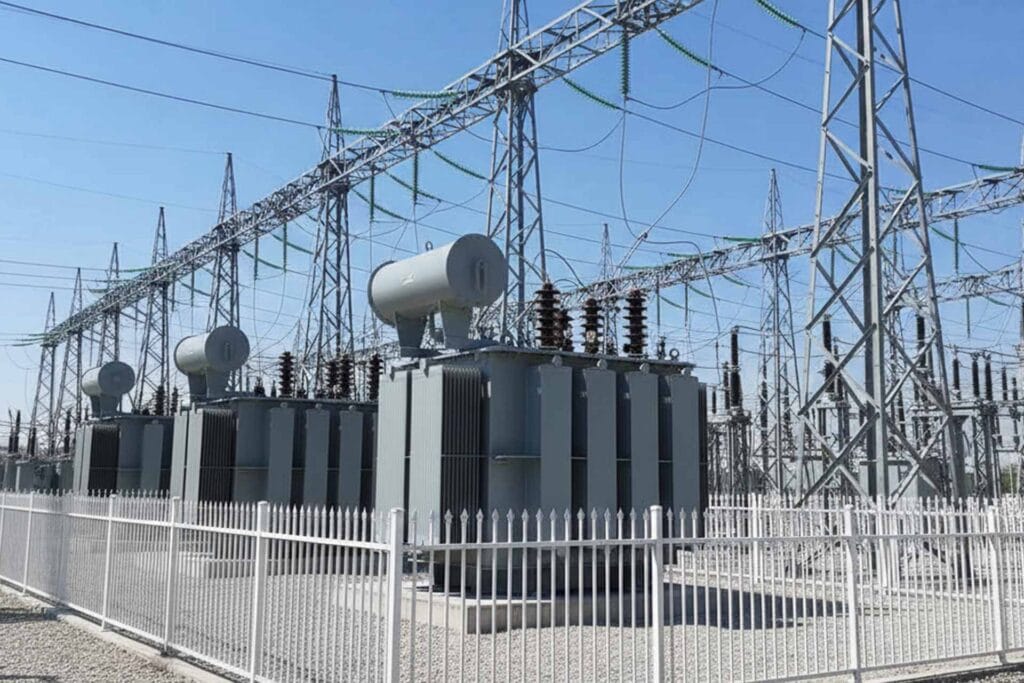
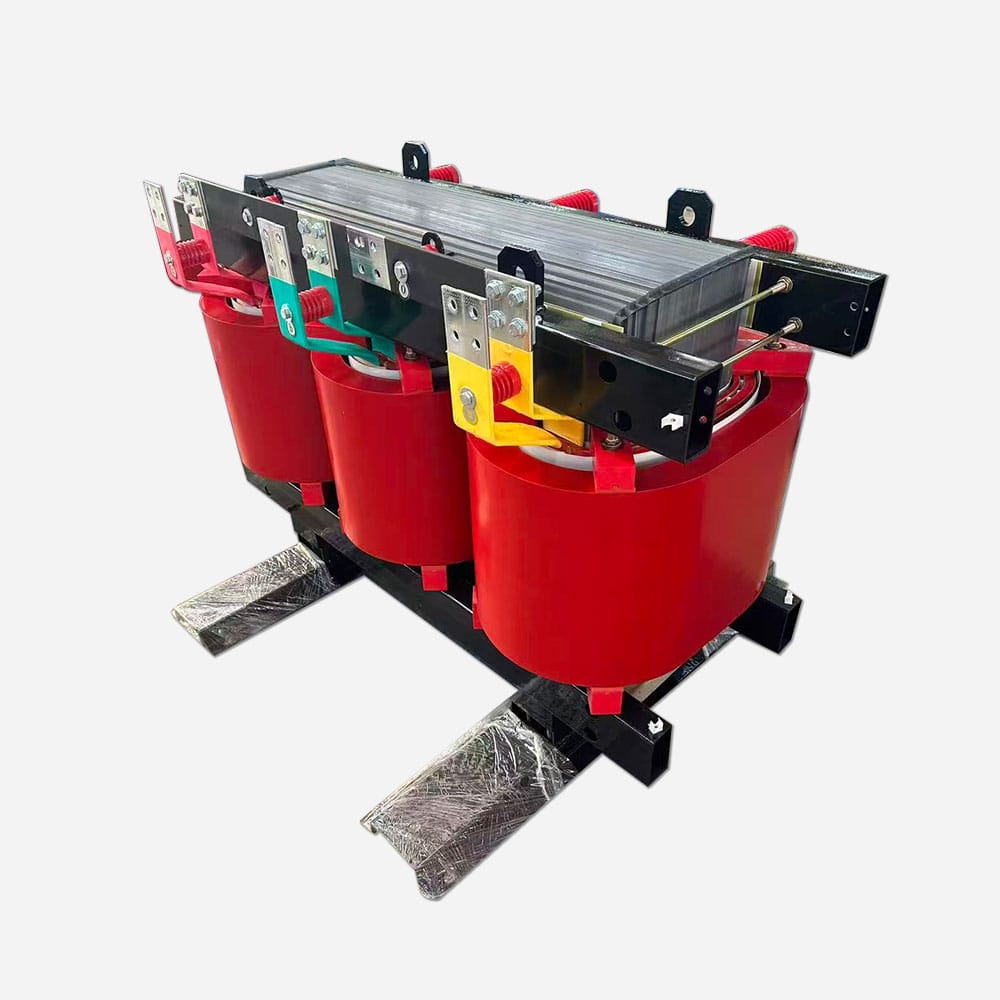
The transformer is the center of voltage conversion in an industrial power distribution system. It must be selected according to load capacity, voltage level, installation environment, operating duty, cooling requirements, and future expansion.
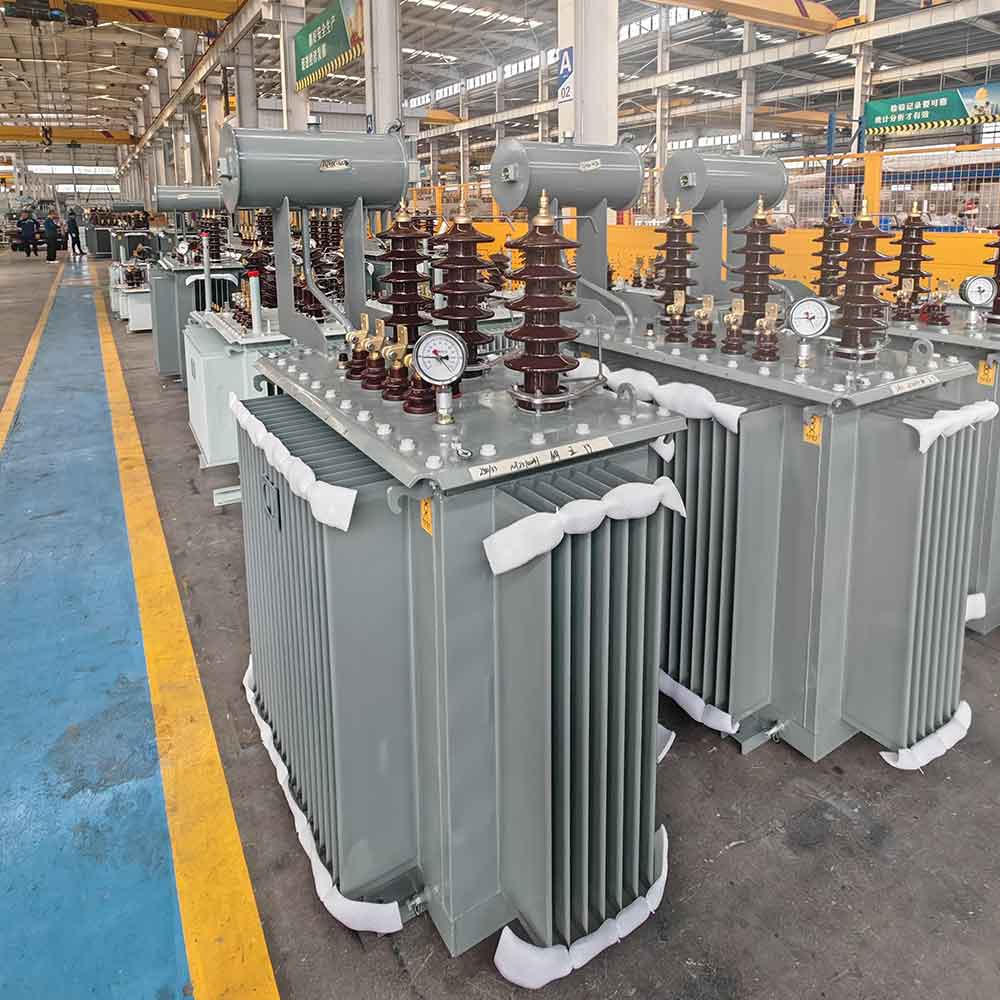
An Масляный трансформатор is commonly used in industrial and outdoor power distribution applications because transformer oil supports insulation and cooling. It can be suitable for projects requiring reliable voltage conversion and long-term operation.
Transformer selection should consider:
Rated capacity.
Primary and secondary voltage.
Frequency.
Load growth.
Outdoor or indoor installation.
Ambient temperature.
Cooling performance.
Overload requirements.
Maintenance accessibility.
Coordination with upstream and downstream switchgear.
A transformer that is too small may overload during peak demand. A transformer that is poorly matched with the switchgear may create protection coordination problems. The best approach is to select the transformer as part of the complete system, not as an isolated product.
Low Voltage Switchgear for Downstream Distribution
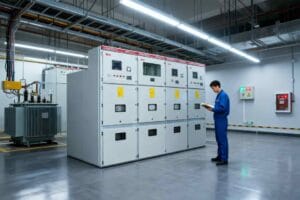
After voltage conversion, low voltage switchgear distributes power to production equipment, motors, lighting, HVAC systems, charging stations, auxiliary systems, and control cabinets.
Low voltage switchgear must match the downstream load profile and maintenance strategy. In large or medium-sized industrial projects, drawout-type switchgear can make maintenance and feeder replacement more convenient.
Низковольтные распределительные устройства GCK Drawout is designed for low-voltage power distribution systems that require modular structure, flexible configuration, and reliable operation.
For low-voltage assemblies, the IEC 61439 low-voltage switchgear and controlgear assemblies standard page can be used as a reference when preparing technical specifications.
Key selection points include rated current, short-circuit withstand capacity, feeder quantity, incoming cabinet configuration, outgoing circuit arrangement, busbar structure, metering, protection devices, and spare capacity.
Prefabricated Substations for Compact Industrial Projects
A prefabricated substation can simplify industrial power distribution by integrating high-voltage switchgear, transformer equipment, low-voltage switchgear, metering, protection, and compensation devices into a compact enclosure.
This structure is useful when the project has limited space, a tight installation schedule, outdoor installation requirements, or repeated deployment needs.
A Сборная подстанция can be used in industrial parks, factories, renewable energy projects, commercial developments, mining sites, construction projects, and temporary power applications.
For compact outdoor distribution, an Подстанция боксового типа в американском стиле or Подстанция боксового типа в европейском стиле can provide integrated power distribution in a factory-assembled structure.
The main advantage is coordination. Instead of installing separate equipment one by one on site, the substation can be designed and assembled as a system before delivery.
Protection Coordination and Fault Management
Protection coordination determines how the system responds when a fault occurs. The goal is to isolate the faulty section without shutting down more of the facility than necessary.
A good protection design should coordinate:
Incoming high voltage protection.
Transformer protection.
Low voltage main protection.
Outgoing feeder protection.
Motor protection.
Ground fault protection.
Short-circuit protection.
Overload protection.
Emergency shutdown requirements.
If coordination is poor, a minor downstream fault may trip the main incoming circuit and stop a large production area. If protection is too slow, equipment may be exposed to unnecessary damage.
For industrial plants, selective protection can reduce downtime and improve system stability. Project teams should provide single-line diagrams, transformer data, load lists, feeder information, and short-circuit current data when requesting technical support.
Electrical Safety in Industrial Distribution Rooms
Electrical safety should be built into the power distribution system from the beginning. Equipment design, grounding, interlocking, compartment separation, cable layout, warning labels, and maintenance procedures all affect safety.
Сайт OSHA electrical safety resources provide useful background on common electrical hazards and safe work practices. For projects involving energized equipment, arc flash awareness and controlled maintenance procedures are especially important.
An industrial distribution room should consider:
Safe operating space.
Clear access paths.
Proper grounding.
Warning labels.
Mechanical and electrical interlocking.
Protection relay settings.
Cable trench safety.
Ventilation.
Fire prevention measures.
Maintenance lighting.
Access control.
A power distribution system is not safe only because it uses reliable equipment. It is safe when the equipment, room layout, operating procedures, and maintenance planning are designed together.
Cable Routing, Grounding, and Site Layout
Cable routing and grounding are sometimes treated as secondary details, but they strongly affect the performance and safety of the entire system.
Poor cable routing can cause installation difficulty, overheating, maintenance problems, or unclear circuit identification. Poor grounding can increase risk during fault conditions and make protection less reliable.
When planning cable routes, consider cable entry direction, cable trench size, bending radius, separation between power and control cables, spare routes for future expansion, and maintenance access.
Grounding design should consider soil condition, corrosion protection, equipment bonding, transformer grounding, switchgear grounding, substation grounding, and continuity testing.
The layout of the electrical room or substation should also leave enough space for equipment operation, door opening, inspection, cable pulling, and future extension.
Industrial Power Distribution for Renewable Energy and EV Charging
Industrial power distribution is no longer limited to traditional factory loads. Many projects now include solar power, energy storage, EV charging, and smart monitoring systems.
Сайт International Energy Agency electricity resources highlight the growing importance of electricity infrastructure as energy systems become more electrified and more dependent on reliable grids.
Renewable energy and EV charging projects may require:
Grid connection coordination.
Transformer capacity planning.
Compact substation solutions.
Outdoor equipment protection.
Load fluctuation management.
Metering and monitoring.
Protection coordination.
Expansion for future charging points or energy systems.
For these applications, power distribution equipment should be planned early. Adding transformers and switchgear after the main project design is nearly complete may create space, cable, and protection coordination problems.
Common Design Mistakes to Avoid
One common mistake is selecting equipment only by rated voltage. Voltage is important, but it does not define the full system. Rated current, short-circuit capacity, protection settings, installation environment, and future expansion are also critical.
Another mistake is ignoring load growth. Many industrial projects expand after commissioning. If no spare feeder capacity or transformer margin is planned, future upgrades become more difficult.
A third mistake is separating equipment procurement from engineering design. Switchgear, transformers, cables, and protection devices must work together. Treating them as unrelated items can create hidden problems.
Some project teams also underestimate environmental conditions. Heat, humidity, dust, corrosion, altitude, and poor ventilation can affect equipment reliability.
Finally, many projects do not prepare enough documentation. Without drawings, wiring diagrams, test reports, and maintenance instructions, future troubleshooting becomes harder.
Information to Prepare Before System Design

A complete technical inquiry helps the supplier provide a better solution. Before planning an industrial power distribution system, prepare the following information:
Project type.
Installation location.
Incoming voltage and frequency.
Transformer capacity requirement.
Load list.
Peak demand.
Single-line diagram if available.
Incoming and outgoing feeder quantity.
Short-circuit current level if known.
Indoor or outdoor installation.
Cable entry direction.
Environmental conditions.
Required standards.
Protection and metering requirements.
Expansion plan.
Site layout drawings.
For customized system planning, project teams can send technical information through the Свяжитесь с нами page.
Заключение
An industrial power distribution system is not just a group of electrical cabinets. It is a coordinated network that supports power receiving, voltage transformation, circuit protection, load distribution, safety, maintenance, and future expansion.
The best design starts with load planning and system coordination. High voltage switchgear, transformers, low voltage switchgear, prefabricated substations, cables, protection devices, grounding, and site layout must be selected as one complete solution.
For factories, industrial parks, renewable energy projects, mining sites, commercial complexes, temporary power systems, and infrastructure facilities, a well-designed power distribution system can improve reliability, reduce downtime, support safer operation, and make future upgrades easier.
For industrial power distribution system equipment and customized electrical solutions, visit Shandong Dedication Electric Co., Ltd. or submit project details through the Свяжитесь с нами page.
ЧАСТО ЗАДАВАЕМЫЕ ВОПРОСЫ
What is an industrial power distribution system?
An industrial power distribution system receives electrical power, transforms voltage, distributes electricity to different loads, and protects circuits from faults. It usually includes switchgear, transformers, cables, protection devices, metering, and grounding systems.
What equipment is used in an industrial power distribution system?
Common equipment includes high voltage switchgear, power transformers, low voltage switchgear, prefabricated substations, protection relays, metering devices, cable systems, and grounding equipment.
How do I design an industrial power distribution system?
Start with load planning, voltage level confirmation, transformer capacity, short-circuit analysis, feeder quantity, protection coordination, installation environment, cable layout, grounding design, and future expansion requirements.
Why is protection coordination important?
Protection coordination ensures that the correct device operates during a fault. Good coordination can isolate the faulty section while keeping other parts of the facility running, reducing unnecessary downtime.
Can an industrial power distribution system be customized?
Yes. Industrial power distribution systems can be customized according to voltage, capacity, load type, site layout, switchgear configuration, transformer selection, cable entry, protection requirements, and environmental conditions.