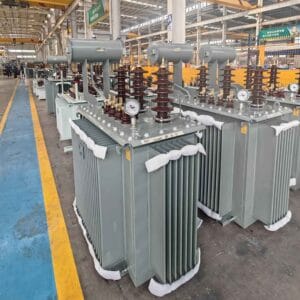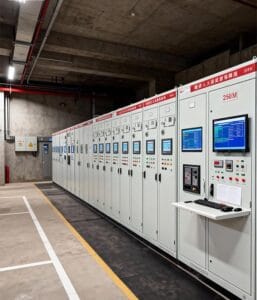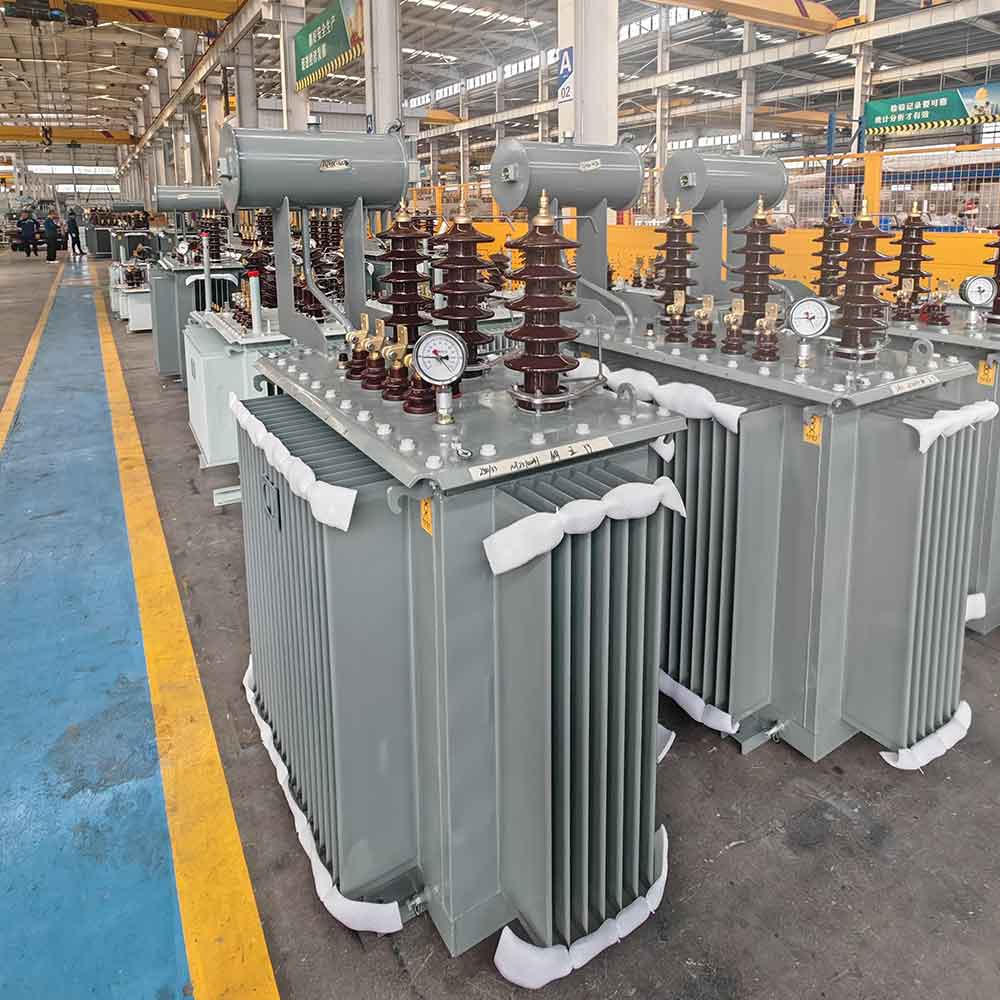
In real-world power systems, few equipment types are as “quietly essential” as the oil immersed self cooled transformer. It doesn’t draw attention, yet it sits at the center of distribution networks, keeping voltage stable and power flowing continuously.
From a manufacturing perspective, this type of transformer is not just a product—it is a balance between thermal physics, insulation behavior, and long-term operational reliability. Understanding how it actually works (beyond textbook definitions) helps engineers, buyers, and project planners make better decisions.
This article breaks it down in a more practical way: how it behaves in operation, why its structure has barely changed for decades, and why it still dominates many power distribution systems.
Оглавление
The Idea Behind “self-Cooled” Is Simpler Than It Sounds
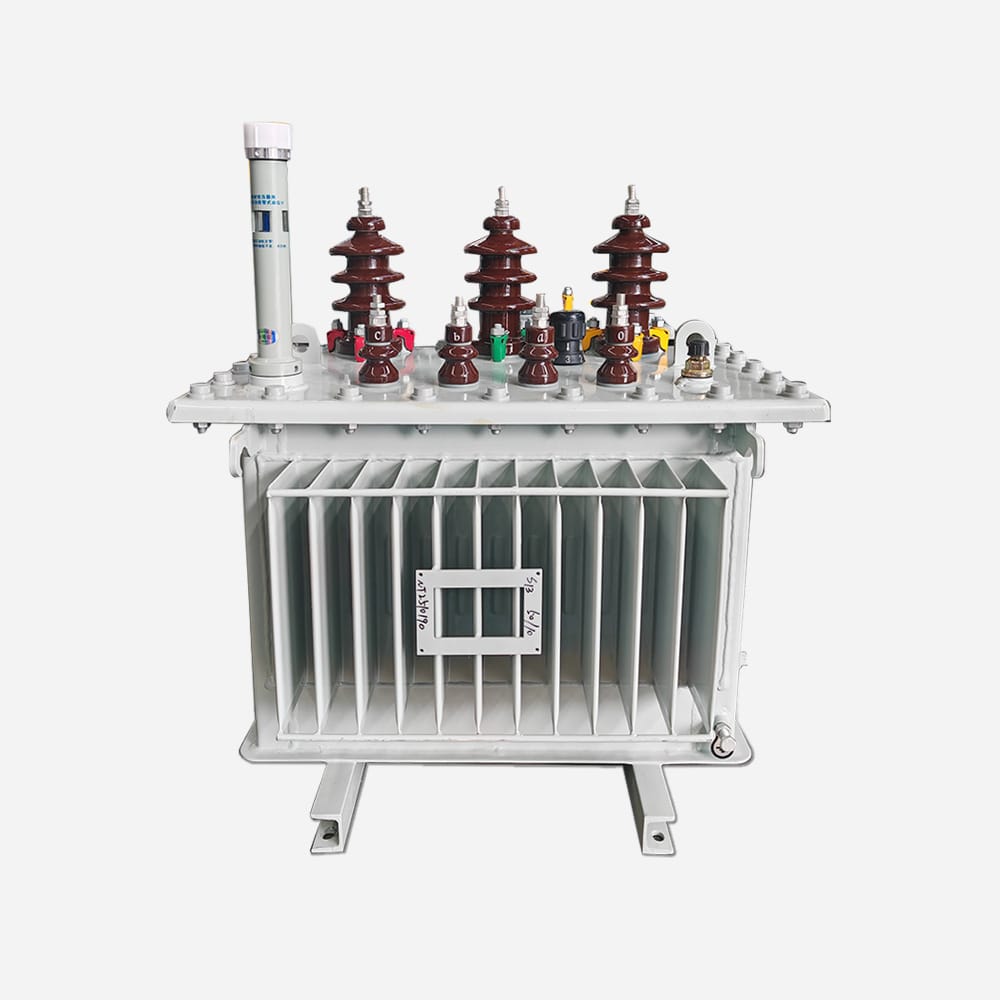
The term oil immersed self cooled transformer often sounds more complex than it really is.
At its core, the concept is straightforward:
- Heat is generated inside the windings
- Oil absorbs that heat
- Heated oil moves upward naturally
- Cooler oil replaces it from below
- Heat is released into surrounding air through the tank surface
No fans. No pumps. No auxiliary cooling system.
What makes this design interesting is that it relies entirely on natural physical movement, not mechanical intervention. In engineering terms, this is what makes ONAN cooling so widely used in distribution-level transformers.
Inside the Tank: What Is Actually Happening
If you were to observe the inside of a running transformer (in a controlled engineering environment), you would not see anything “moving” mechanically. But thermally, it is constantly active.
Three processes happen simultaneously:
- Electrical current produces heat in the windings
- The insulating oil absorbs and transfers that heat
- Temperature differences create continuous circulation loops
The key point here is stability. The oil doesn’t just “cool” once—it keeps circulating as long as the transformer is energized.
This is why insulating oil is not just a cooling medium, but also part of the electrical insulation system.
Why Oil Is Still Used After All These Years
One common question in modern power discussions is why oil-based transformers are still widely used when alternatives exist.
The answer is not tradition—it is physics.
Insulating oil provides:
- High dielectric strength
- Efficient heat transfer capability
- Stability under long-term electrical stress
- Compatibility with high-voltage windings
Air, in comparison, is far less efficient at both insulation and heat transfer in compact high-voltage environments.
This combination is what keeps oil immersed designs relevant in modern grids.
The Onan Cooling Cycle in Real Operation
The cooling method used here is often labeled ONAN (Oil Natural Air Natural). In practice, it behaves like a slow but continuous thermal loop.
A more realistic breakdown looks like this:
- Windings heat up during load conditions
- Oil in direct contact with windings heats first
- Hot oil rises toward the upper tank region
- Cooler oil from lower sections replaces it
- Heat transfers through tank walls and radiators
- External air removes heat via natural convection
There is no sudden cooling effect—only a continuous balance between heat generation and heat release.
This is also why трансформатор design focuses heavily on surface area and radiator structure.
Structure Is Simple, But Not “basic”
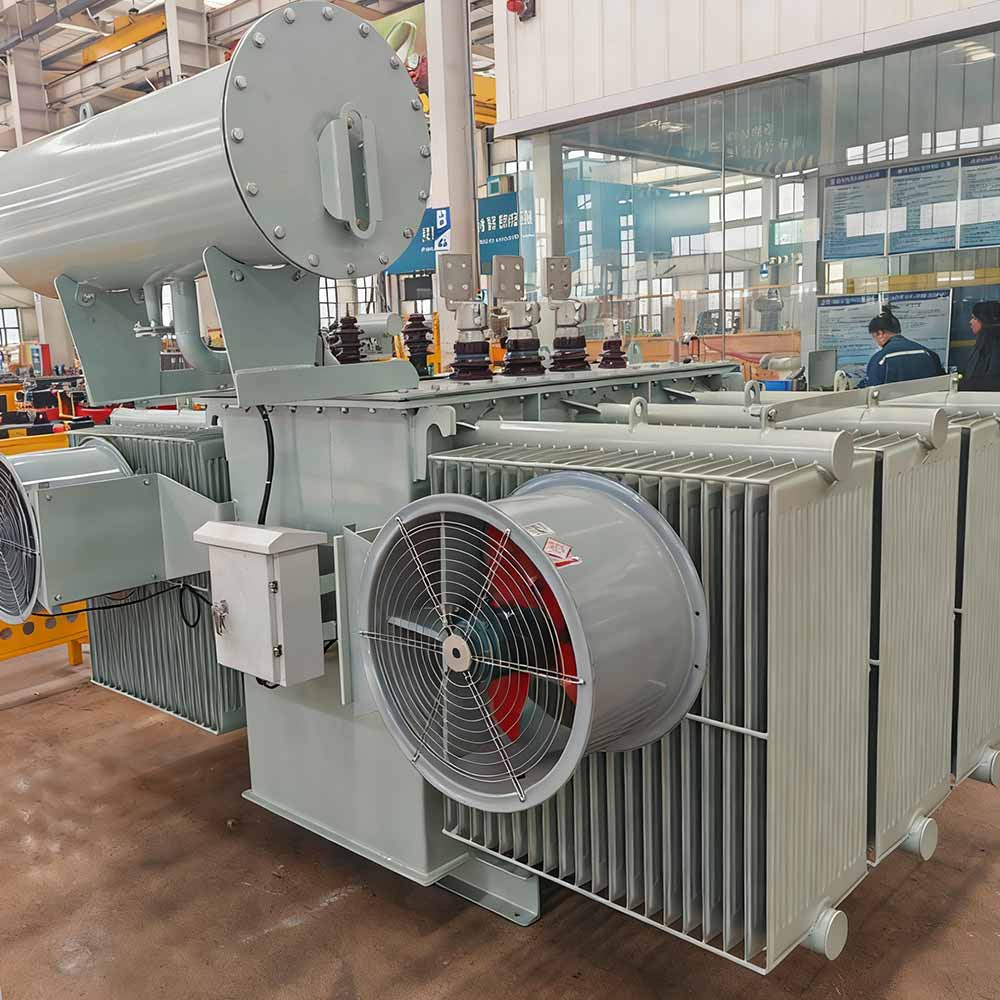
Although the system looks structurally simple from the outside, each component has a very specific role.
Core system behavior
The magnetic core is designed to reduce energy loss rather than just “carry” magnetic flux. Even small improvements in core design can significantly affect heat generation.
Windings
Windings are where most thermal stress occurs. Their arrangement directly affects how evenly heat spreads into the oil.
Oil tank
The tank is not just a container. It is a heat exchange surface. Its geometry influences cooling efficiency more than most people assume.
Radiators
Radiators increase surface area. Without them, natural cooling would be much slower and less stable under load variation.
Электроизоляционное масло
Oil is both a thermal medium and a dielectric barrier. Its condition directly affects трансформатор lifespan.
Why This Design Still Dominates Distribution Networks
Despite technological evolution in power systems, this transformer type continues to appear in substations and industrial grids for one main reason: predictable behavior under stress.
In practical operation, engineers value:
- Stable thermal response during load changes
- No dependency on external cooling systems
- Tolerance to continuous operation cycles
- Straightforward fault behavior and diagnostics
In other words, it behaves consistently, even in less-than-ideal environments.
Comparison Thinking: Where It Fits Best
Instead of listing textbook comparisons, it is more useful to understand the operational logic.
Oil immersed self cooled transformers tend to be chosen when:
- Load is continuous or long-duration
- Environmental conditions are outdoor or semi-industrial
- System reliability is prioritized over compact size
- Maintenance intervals need to remain predictable
Dry-type systems may appear in different contexts, but oil immersed units are still preferred where thermal buffering matters.
Engineering Standards Are Not Just Paperwork
Standards such as IEC requirements are often seen as formal compliance, but in practice they reflect real operational constraints:
- Temperature rise limits define safe continuous operation
- Insulation coordination ensures long-term dielectric stability
- Short-circuit performance requirements reflect grid instability scenarios
- Loss limits directly affect system efficiency over time
For manufacturers, these standards are not optional—they shape every stage from design to testing.
What Matters in Long-Term Operation
A transformer is not judged at installation—it is judged after years of service.
Long-term performance depends on:
- Oil condition stability over time
- Thermal cycling behavior under variable loads
- Sealing integrity of the tank system
- Consistency of insulation performance
Most field issues are not sudden failures but gradual changes that could have been detected early through routine monitoring.
A Manufacturing Perspective Most Buyers Don’t See
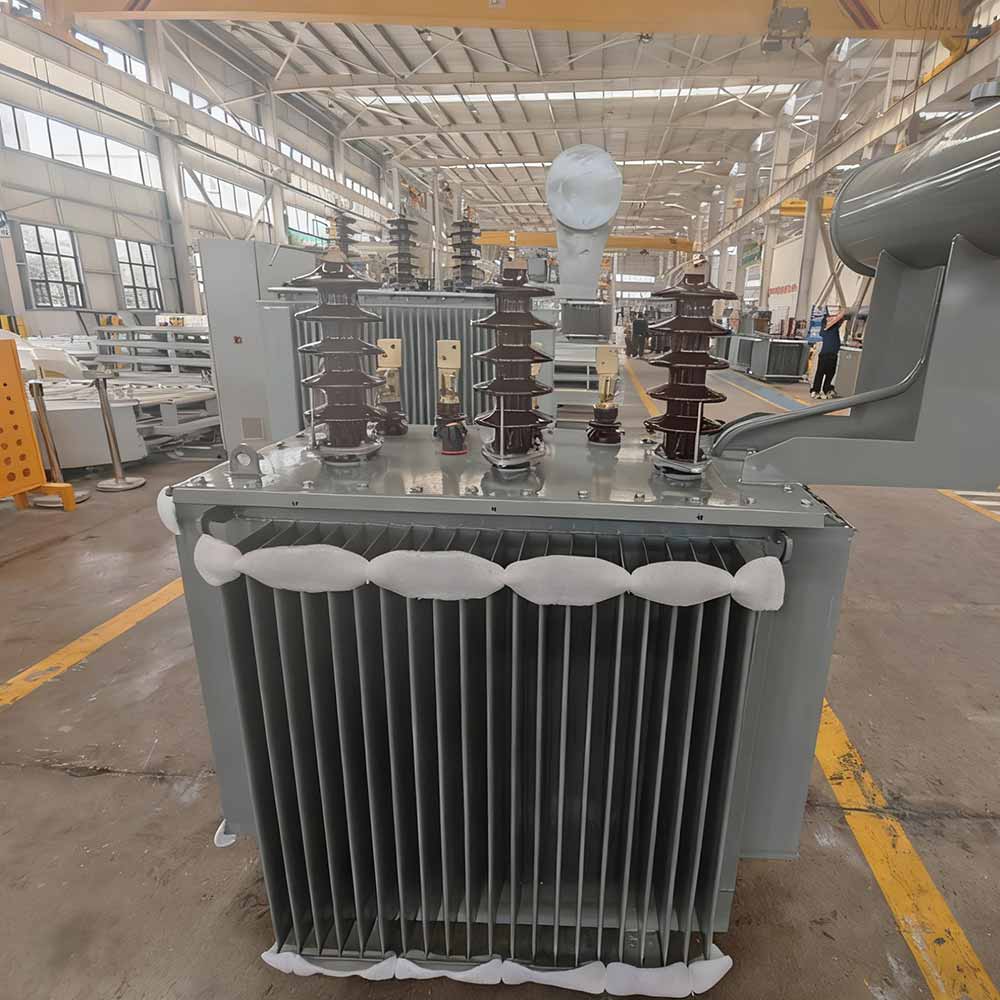
From the factory side, the performance of an oil immersed self cooled transformer is influenced more by process control than design drawings.
Key stages that matter include:
- Core stacking precision (affects no-load loss)
- Winding tension control (affects mechanical strength)
- Vacuum oil filling (affects insulation reliability)
- Thermal aging treatment (affects long-term stability)
Two transformers with identical specifications can behave differently if these steps are not controlled properly.
Заключение
Сайт oil immersed self cooled трансформатор remains one of the most established solutions in power distribution not because it is outdated, but because it is structurally logical and operationally stable.
Its working principle is based on a simple but effective natural cycle—heat generation, oil circulation, and air-based dissipation. This simplicity is exactly what makes it reliable in real-world grid conditions.
For engineers and project planners, the key is not just understanding what it is, but how it behaves over time under continuous load, environmental variation, and system stress.
In modern power infrastructure, where reliability often matters more than complexity, this transformer type continues to hold a very practical position.
ЧАСТО ЗАДАВАЕМЫЕ ВОПРОСЫ
Q1: What is an oil immersed self cooled transformer?
It is a transformer that uses insulating oil for both insulation and cooling, relying on natural oil circulation and air convection without any external cooling equipment.
Q2: How does an oil immersed self cooled transformer cool itself?
Heat generated in the windings is absorbed by insulating oil, which rises naturally. The cooled oil then circulates back down while heat is released through the tank and radiators into the air.
Q3: What does ONAN mean in трансформаторы?
ONAN stands for Oil Natural Air Natural. It describes a cooling method where oil circulates naturally inside the transformer and heat is dissipated into the surrounding air without mechanical assistance.
Q4: Where are oil immersed self cooled transformers commonly used?
They are widely used in power distribution systems, substations, industrial plants, renewable energy projects, and other outdoor or heavy-duty electrical networks.
Q5: What are the main advantages of this type of transformer?
It offers stable operation, strong insulation performance, low maintenance requirements, and reliable cooling through a fully natural process, making it suitable for long-term continuous use.