Оглавление
Введение

Power distribution systems are changing fast. Projects today rarely allow long construction cycles or complex on-site civil work, especially in industrial zones, renewable energy plants, and rapidly expanding urban grids.
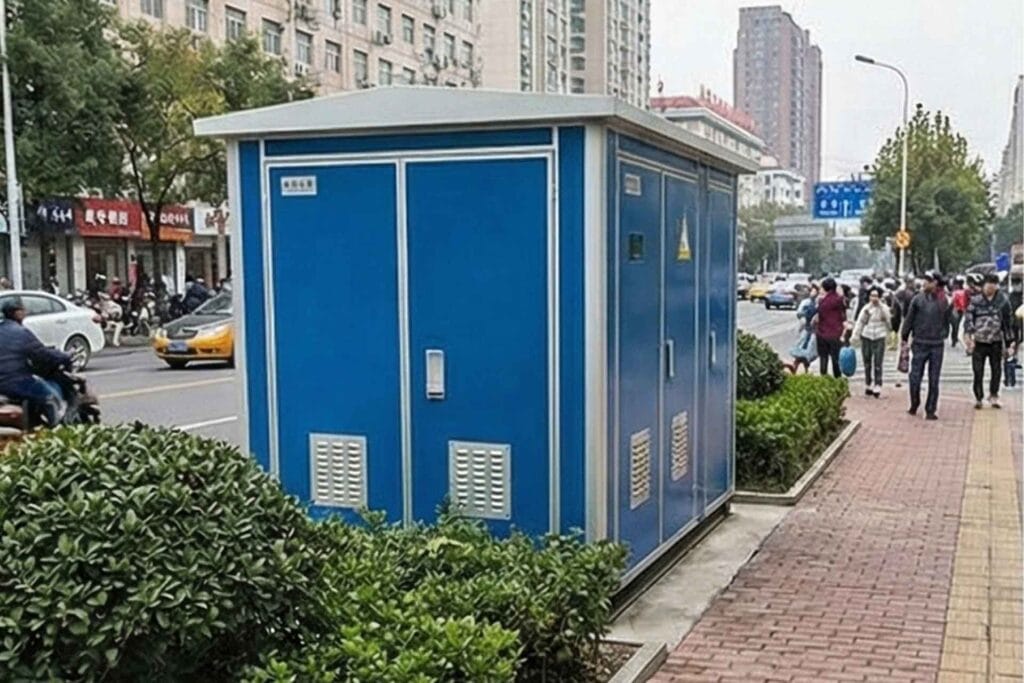
This is where the outdoor box substation has quietly become a practical standard rather than an alternative.
Instead of building everything on-site, most of the system is now engineered, assembled, and tested in a controlled factory environment before being delivered as a complete unit. That shift has changed how power projects are planned and executed.
From a manufacturing point of view, the focus is no longer just “building equipment,” but making sure the system behaves consistently under real grid conditions once installed outdoors.
What an Outdoor Box Substation Actually Solves in Real Projects
In practice, most power engineers don’t look at substations as products—they look at problems:
- Limited installation space
- Tight project schedules
- Unstable environmental conditions
- Coordination between multiple electrical systems
An outdoor box substation addresses these issues by combining:
- Medium-voltage switching
- Power transformation
- Low-voltage distribution
All within a single enclosed structure designed for outdoor operation.
The real value is not the structure itself, but the reduction in on-site engineering uncertainty.
The Internal Layout That Determines Performance
Although the enclosure looks simple from the outside, the internal structure is highly segmented and deliberately arranged.
A typical configuration includes:
High-voltage section
Incoming power is controlled and isolated here. This is where system protection begins, not at the end.
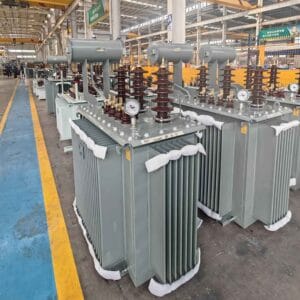
Transformer section
This is the core energy conversion point. Thermal behavior, insulation stability, and vibration control all matter more than raw capacity.
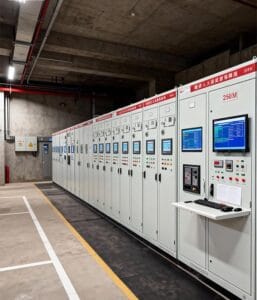
Low-voltage section
Distribution, metering, and protection logic are centralized here. In many projects, this part becomes the “decision layer” of the entire system.
What often gets overlooked is that these sections are not independent. Their coordination defines how stable the system performs under load fluctuation.
How Power Actually Flows Through the System
Rather than treating it as a theoretical process, it’s easier to understand it as a controlled sequence:
Incoming grid power → switching control → voltage transformation → distribution output
But in real operation, additional factors come into play:
- Load variation during peak hours
- Fault isolation timing
- Temperature rise inside the enclosure
- Coordination between protection devices
These are the details that separate a basic assembly from a stable grid component.
Design Logic Behind Modern Outdoor Box Substations
Most discussions around substations focus on voltage levels or rated capacity, but real engineering decisions go deeper.
Key design priorities include:
- Stability under long-term outdoor exposure
- Internal heat dissipation without active complexity
- Electrical clearance consistency under humidity variation
- Protection system coordination under fault conditions
In recent years, design direction has shifted toward standardization + modular adaptation, which allows systems to be configured faster without losing engineering reliability.
How Manufacturing Actually Shapes the Final Performance
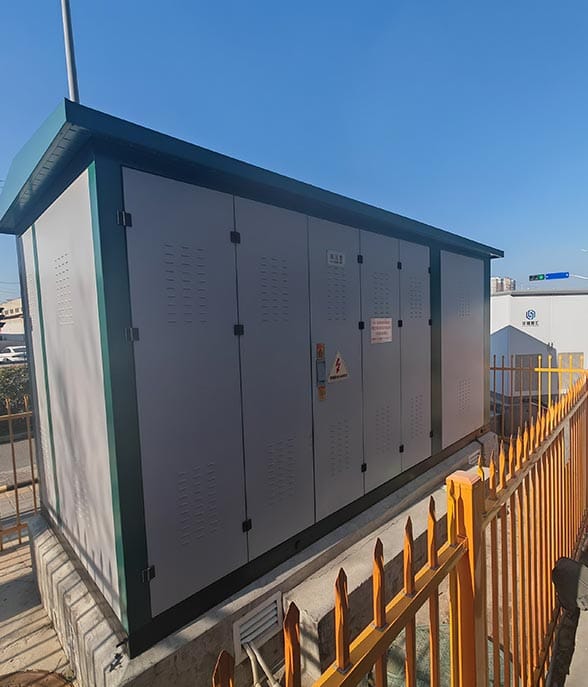
Inside a production environment, the process is less linear than it appears on paper.
It usually moves through several tightly controlled stages:
Structural formation
The enclosure is not just a shell—it defines protection level, thermal behavior, and long-term corrosion resistance.
Electrical integration
Transformers, switchgear, busbars, and control systems are installed in a specific sequence to avoid future maintenance conflicts.
System-level testing
Instead of testing components individually, the entire unit is validated as a complete electrical system under simulated operating conditions.
This is where factory production becomes critical. A mistake caught here prevents instability later in the field.
Where Outdoor Box Substations Are Most Commonly Applied
Demand is strongest in environments where power reliability and deployment speed both matter:
- Renewable energy plants (solar and wind integration points)
- Industrial manufacturing zones
- Mining and heavy-load operations
- Urban infrastructure expansion
- Railway and transportation electrification systems
- Remote or rural grid development
In these scenarios, the substation is less of a “station” and more of a deployment-ready power node.
Outdoor Box Substation vs Conventional Substation Thinking
Instead of comparing specifications, the real difference is in engineering philosophy.
Traditional substations:
- Built on-site
- Dependent on civil engineering progress
- Highly segmented construction phases
- Pre-integrated before arrival
- Designed for rapid deployment
- Tested as a complete system before installation
The shift is not only technical—it changes how power infrastructure projects are scheduled and managed.
Why Direct Manufacturing Control Matters in Real Projects
In large-scale electrical projects, consistency matters more than isolated performance metrics.
Working directly with a manufacturing source typically means:
- Design decisions are reflected in production without translation loss
- Electrical coordination is controlled in-house
- Custom requirements are integrated earlier in the process
- System behavior is more predictable after installation
This is especially important in projects where downtime or instability carries operational risk.
A Different Way to Look at Outdoor Box Substations
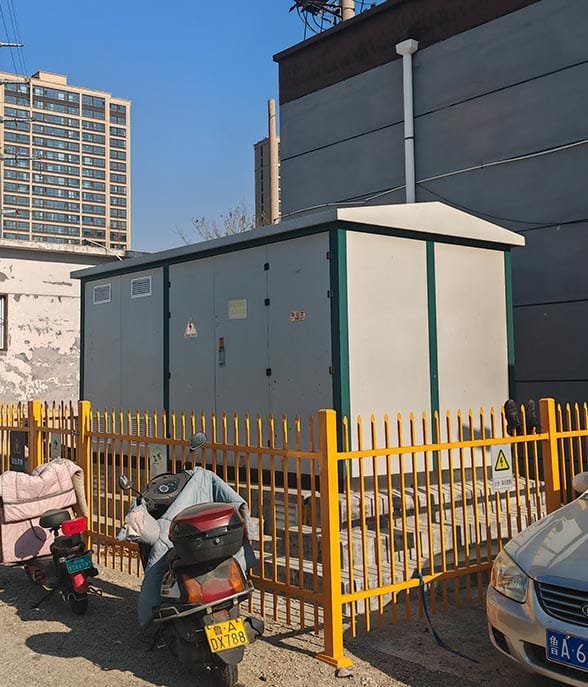
Instead of treating it as a single product, it is more accurate to view it as a pre-engineered power distribution module.
Its purpose is not only to transform voltage, but to simplify how energy infrastructure is deployed, replicated, and maintained across different environments.
As grids continue to expand and renewable integration increases, this type of system is becoming less of an option and more of a standard engineering approach.
Заключение
Performance in outdoor box подстанции is rarely about one component. It comes from how the entire system behaves together under real-world conditions.
A well-designed system should:
- Maintain stability under variable load
- Operate safely in outdoor environments
- Require minimal on-site adjustment
- Deliver predictable performance across installations
From a manufacturing standpoint, the goal is not just production—it is repeatable reliability.
As power infrastructure continues to evolve toward faster deployment and higher integration, the role of outdoor box substations will continue to expand across global projects where efficiency and stability are both non-negotiable.
ЧАСТО ЗАДАВАЕМЫЕ ВОПРОСЫ
Q1: What is an outdoor box substation used for?
It is used for medium-voltage power distribution, converting electricity to lower voltage levels for industrial, utility, and infrastructure applications.
Q2: How does an outdoor box substation work?
It receives medium-voltage power, passes it through a transformer for voltage reduction, then distributes electricity through a low-voltage panel.
Q3: What are the main components inside an outdoor box подстанция?
It typically includes a high-voltage switchgear unit, transformer compartment, and low-voltage distribution system with protection devices.
Q4: Where are outdoor box substations commonly installed?
They are widely used in renewable energy plants, industrial zones, mining sites, urban grids, and railway power systems.
Q5: What are the advantages of using an outdoor box substation?
It offers compact design, faster installation, improved safety, and factory-tested reliability for outdoor power distribution systems.