Table of Contents
Introduction

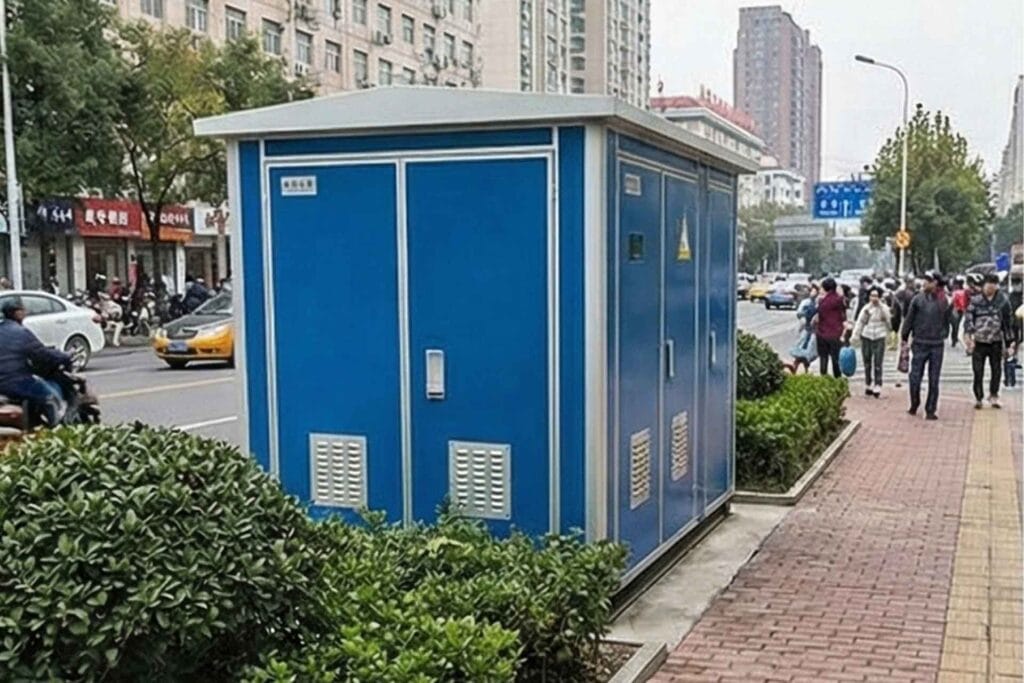
A box bay substation is a compact, prefabricated electrical distribution solution designed to integrate high voltage switchgear, transformers, and low voltage distribution equipment in a single enclosure. Unlike conventional substations, which require extensive civil construction and on-site assembly, box bay substations are factory-built, reducing installation time and minimizing operational disruption.
These substations are essential in modern power systems, providing reliable energy distribution for industrial plants, commercial complexes, and renewable energy projects. Their modular design ensures scalability, safety, and ease of maintenance, making them an ideal choice for operators seeking efficient and cost-effective electrical solutions.
Key Components of a Box Bay Substation
Understanding the components of a box bay substation is crucial for both operation and maintenance:
High Voltage Switchgear: This is the backbone of a box substation. It controls the flow of electricity from the incoming high voltage source to the transformers, ensuring safe operation and protection against overloads or short circuits.
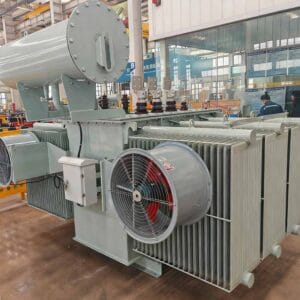
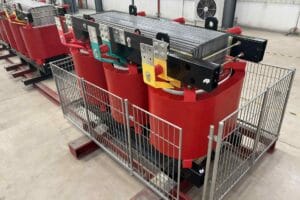
Transformers: Transformers reduce high voltage to a usable level for industrial or commercial consumption. Proper transformer selection is critical for efficiency and longevity, especially in high-demand applications.
Low Voltage Distribution Equipment: This includes control panels, circuit breakers, and monitoring systems. These devices manage the output electricity and ensure a stable supply for connected equipment.
Auxiliary Systems: Grounding, cooling systems, fire protection, and alarms form the auxiliary components. They enhance safety and compliance with international electrical standards.
How Box Bay Substations Work
The operation of a box bay substation is a coordinated process:
- High voltage electricity enters through the switchgear, where protective devices monitor current flow.
- Transformers step down the voltage to the required low voltage level.
- Low voltage distribution equipment channels the electricity to industrial machinery, commercial facilities, or smart grid networks.
- Auxiliary systems continuously monitor the environment and operational conditions, ensuring safety and reliability.
With integrated automation, these substations can operate with minimal human intervention while providing remote monitoring capabilities.
Design Considerations for Box Bay Substations
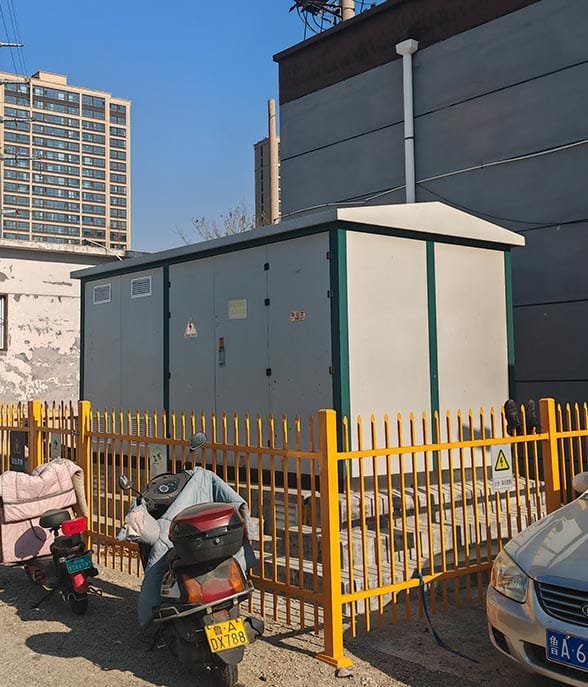
Several factors influence the design of a box bay substation:
- Modular Construction: Prefabricated modules allow for quick assembly and scalability.
- Environmental Adaptation: Substations can be designed for indoor or outdoor installation, with considerations for weatherproofing and temperature control.
- Safety Compliance: Designs follow international standards like IEC 62271 to ensure protection against electrical faults.
- Space Optimization: Compact layouts reduce footprint without compromising functionality.
A well-designed substation balances operational efficiency, safety, and long-term durability.
Advantages of Using Box Bay Substations
Choosing a box substation offers several benefits over traditional solutions:
- Faster Installation: Factory-built units significantly reduce on-site construction time.
- Cost-Effectiveness: Lower labor costs and minimal civil works reduce total project expenditure.
- Enhanced Safety: Integrated protective systems and compliance with international standards ensure operator safety.
- Scalability: Modular design allows for future expansion to meet growing energy demands.
- Reliability: Factory-tested components ensure consistent performance.
These advantages make box bay substations ideal for a wide range of industries, including manufacturing, commercial infrastructure, and renewable energy facilities.
Maintenance and Troubleshooting Tips
Regular maintenance is key to prolonging the lifespan of a box substation:
- Conduct routine inspections of switchgear, transformers, and control panels.
- Monitor temperature, oil levels, and electrical parameters to prevent overload.
- Common issues include faulty circuit breakers, transformer overheating, and grounding problems.
- Preventive maintenance strategies, such as cleaning, tightening connections, and software updates, ensure consistent operation.
- Consider retrofitting or upgrading older units to enhance efficiency and meet new standards.
Applications Across Industries
Box bay substations are versatile and can be deployed across various sectors:
| Industry | Typical Application | Benefits |
|---|---|---|
| Industrial Manufacturing | Power distribution for production lines | Reliable, low downtime, easy integration |
| Commercial Complexes | Electricity supply for office buildings and shopping centers | Compact, safe, and quick to install |
| Renewable Energy | Solar farms, wind farms | Modular, scalable, supports smart grid integration |
| Smart Grids | Urban electrical networks | Enhanced monitoring, automation, and energy efficiency |
These applications demonstrate the flexibility and efficiency of box bay substations in diverse scenarios.
Choosing the Right Box Bay Substation

When selecting a box bay substation, consider the following factors:
- Capacity and Voltage Rating: Match your project’s energy requirements.
- Environmental Conditions: Ensure the substation is suitable for indoor or outdoor installation.
- Prefabricated vs. Modular Options: Evaluate the balance between cost and customization needs.
- Supplier Quality and Support: Choose manufacturers who provide testing, warranty, and after-sales service.
- Cost Estimation: Analyze ROI to justify investment in prefabricated solutions.
Selecting the right substation ensures long-term reliability and operational efficiency.
Conclusion
Box bay substations are a reliable, compact, and cost-effective solution for modern electrical distribution. Their modular design, quick installation, and safety features make them ideal for industrial, commercial, and renewable energy applications. As a manufacturer, we provide high-quality prefabricated box bay substations tailored to meet your project requirements, ensuring efficiency, safety, and long-term reliability. Investing in a box bay substation not only simplifies installation and maintenance but also supports scalable energy distribution for future growth.
FAQ
What is a box bay substation?
A prefabricated electrical distribution unit combining high voltage switchgear, transformers, and low voltage panels in a compact enclosure.
How does it differ from a standard substation?
It is factory-built, modular, and faster to install compared to conventional substations, which require extensive on-site construction.
What are the common maintenance challenges?
Overheating transformers, circuit breaker faults, and grounding issues are typical challenges, solvable through preventive maintenance.
Can it be customized for specific projects?
Yes, manufacturers can provide tailored solutions to meet capacity, voltage, and environmental requirements.
What safety standards should be followed?
International standards such as IEC 62271 ensure safe operation, protection, and compliance.