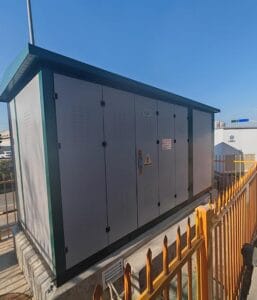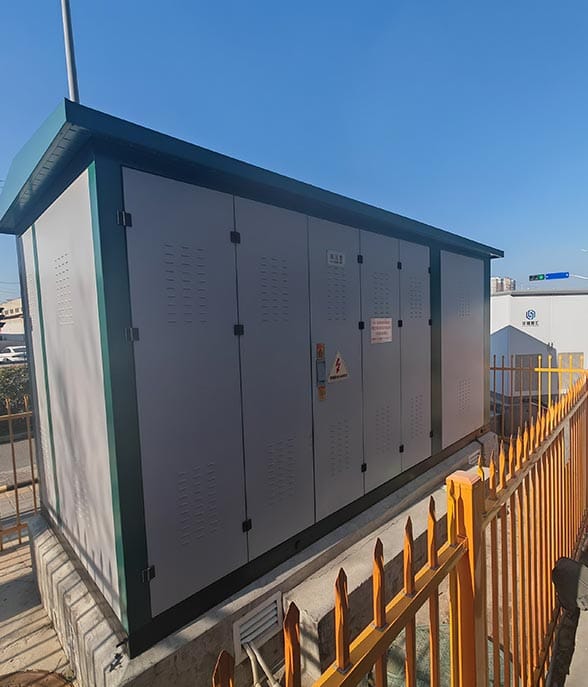
Modern power projects are no longer judged only by whether electricity can be delivered. Buyers now care about installation speed, space efficiency, safety, maintenance access, and whether the equipment can adapt to industrial growth over the next ten or twenty years. This is why the America box mode substation has become an important choice for factories, industrial parks, commercial buildings, renewable energy projects, and high-load power distribution systems.
An America box mode substation is not simply a transformer placed inside a cabinet. It is a compact power distribution solution that integrates medium-voltage input, transformer conversion, low-voltage distribution, protection devices, and an outdoor enclosure into one engineered system. For project owners, EPC contractors, and electrical distributors, this type of equipment can reduce site work, simplify power layout, and improve deployment efficiency.
In many markets, this product may also be described as an American box type substation, American-style box-type substation, American prefabricated substation, pad-mounted substation, or compact transformer substation. Although the names may vary, the buyer’s concern is usually the same: how to select a reliable, safe, and project-matched power distribution substation.
جدول المحتويات
Why America Box Mode Substation Is Getting More Attention

The rising demand for reliable electricity is changing how buyers evaluate distribution equipment. Industrial automation, logistics facilities, data centers, solar plants, wind power projects, charging infrastructure, and urban expansion all require stable medium-voltage and low-voltage power distribution.
Traditional substations often require more land, more civil work, longer installation time, and more coordination between different equipment suppliers. By contrast, an America box mode substation is designed as a pre-engineered and factory-assembled solution. The main electrical components are integrated before delivery, which helps reduce on-site installation complexity.
For buyers, this matters because many projects now face tight construction schedules. A factory, commercial building, or renewable energy site may not have the flexibility to wait for complicated field assembly. A compact and prefabricated substation can help the project move from equipment arrival to commissioning more efficiently.
What Is an America Box Mode Substation?
An America box mode substation is a compact electrical distribution unit used to receive medium-voltage power, transform it to a lower voltage, and distribute it safely to end users or downstream electrical systems.
It normally includes three main sections: the high-voltage section, the transformer section, and the low-voltage distribution section. These sections are arranged inside a protected enclosure suitable for outdoor installation. The design is especially useful where space is limited or where a fast, organized power distribution solution is required.
From a buyer’s perspective, the product can be understood as a complete power node. Instead of purchasing separate switchgear, transformer, low-voltage cabinet, enclosure, and site integration work from different sources, the buyer can choose a more integrated solution from one manufacturer.
Main Components Inside the Substation
A reliable America box mode substation depends on proper coordination between its internal components. Each part must be designed according to the voltage level, transformer capacity, load condition, installation environment, and local project requirements.
| المكوّن | Main Function | Buyer’s Key Concern |
|---|---|---|
| مجموعة المفاتيح الكهربائية ذات الجهد العالي | Receives and controls medium-voltage power input | Voltage rating, protection method, switching reliability |
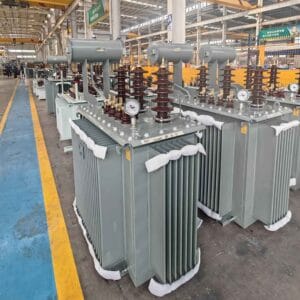
| المحول | Steps medium voltage down to usable low voltage | Capacity, loss level, cooling method, insulation performance |
| Low-voltage distribution cabinet | Distributes power to downstream loads | Circuit quantity, breaker configuration, metering requirements |
| Protection system | Protects against overload, short circuit, and abnormal operation | Safety, selectivity, fault response |
| الضميمة | Protects internal equipment from weather and external damage | IP rating, anti-corrosion design, ventilation, durability |
| Grounding system | Ensures electrical safety and fault current discharge | Grounding reliability and site compatibility |
A good design is not about placing these components together mechanically. The real value is in electrical coordination, heat dissipation, internal clearance, cable access, protection logic, and long-term maintainability.
How the America Box Mode Substation Works
The working process is straightforward but technically important. Medium-voltage power enters the high-voltage side of the substation. The high-voltage switchgear controls the incoming power and provides necessary protection. Then the transformer converts the voltage to the required low-voltage level. Finally, the low-voltage cabinet distributes power to equipment, buildings, production lines, or other loads.
In an industrial plant, this may mean supplying power to motors, production machines, lighting systems, compressors, and control equipment. In a commercial building, it may support HVAC systems, elevators, lighting, office power, and safety systems. In a renewable energy project, the substation may work as part of the grid connection and distribution process.
The main advantage is integration. Instead of managing several independent electrical units, the project can use one compact transformer substation designed to work as a coordinated system.
Key Features That Buyers Should Evaluate
When buyers search for an America box mode substation, they often compare many suppliers based on appearance, capacity, and general configuration. However, serious project selection should go deeper.
First, the structure must be compact but not difficult to maintain. A small footprint is useful, but the internal layout still needs enough space for inspection, cable connection, ventilation, and safe operation.
Second, the enclosure must match the installation environment. Outdoor projects may face rain, dust, sunlight, humidity, salt spray, or industrial pollution. The enclosure should be selected according to real operating conditions, not only basic catalog data.
Third, the electrical configuration must match the load profile. A factory with frequent motor starting is different from a residential community. A data center is different from a mining site. A solar power plant is different from a commercial building. The transformer capacity, low-voltage outgoing circuits, protection settings, and cable arrangement should all be confirmed before manufacturing.
Fourth, the product should allow customization. A manufacturer should be able to adjust voltage level, transformer capacity, enclosure size, circuit layout, protection devices, metering system, and surface treatment according to project needs.
America Box Mode Substation for Industrial Power Distribution
Industrial power systems are one of the most suitable applications for an America box mode substation. Manufacturing plants usually need stable, continuous, and safe electricity to support production equipment. If power distribution is poorly designed, the result may be voltage instability, equipment downtime, overheating, or frequent maintenance problems.
For industrial projects, the main selection points include transformer capacity, load type, expansion reserve, short-circuit protection, grounding design, and cabinet ventilation. The substation should also be easy to inspect because industrial sites often require regular maintenance.
A custom American box type substation can be configured for different industries, including machinery manufacturing, metal processing, chemical production, logistics warehouses, food processing plants, and industrial parks. The product is especially valuable when the project needs a compact outdoor solution close to the load center.
America Box Mode Substation for Data Centers and High-Load Facilities
Data centers and high-load facilities require reliable electrical infrastructure. They usually need stable power distribution, redundancy planning, thermal management, and strict equipment coordination. Although the America box mode substation is not the only solution for such projects, it can play an important role in medium-voltage receiving and localized power distribution.
For this type of application, buyers should pay attention to transformer efficiency, temperature rise, low-voltage output configuration, monitoring capability, and maintenance access. A poorly selected substation may create risks in a facility where continuous operation is critical.
A pad-mounted substation for data center power distribution should not be selected only by capacity. It should also be reviewed according to load growth, backup power strategy, cable routing, protection coordination, and future expansion requirements.
America Box Mode Substation for Renewable Energy Projects
Solar and wind power projects often require electrical equipment that can be installed outdoors, transported easily, and connected efficiently. A prefabricated substation can support these needs because it integrates multiple power distribution functions into one enclosure.
For renewable energy applications, environmental adaptability is very important. Equipment may be installed in open areas where it faces wind, dust, temperature variation, moisture, and long-term sunlight exposure. Therefore, enclosure strength, anti-corrosion treatment, sealing design, and ventilation must be considered carefully.
A compact transformer substation for renewable energy projects should also be designed with proper medium-voltage connection, transformer capacity, protection system, and grounding arrangement. The goal is not only to transform voltage, but also to improve the reliability of the overall power collection and distribution system.
America Box Mode Substation vs European Box Type Substation
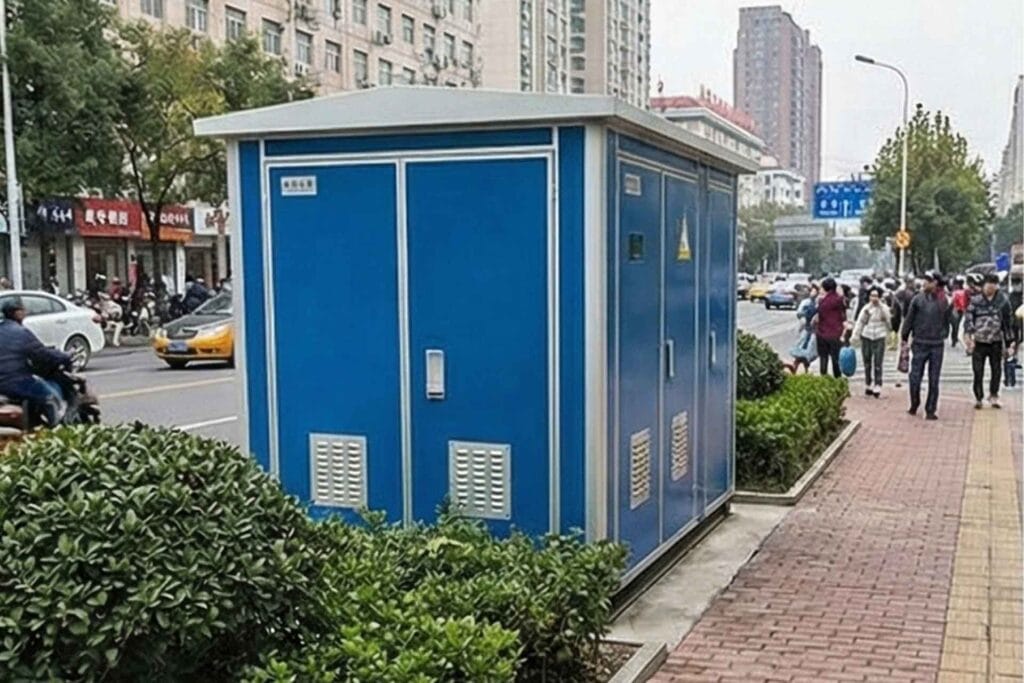
Many buyers compare American-style and European-style substations before making a decision. The difference is mainly related to structure, layout, operation method, maintenance style, and project preference.
An American box type substation is often designed with a compact structure and is commonly associated with pad-mounted distribution solutions. It is suitable for projects that prefer a smaller footprint and integrated transformer-based distribution.
A European box type substation usually has a more clearly separated layout for high-voltage room, transformer room, and low-voltage room. This can be useful in projects that require more internal operating space or a different maintenance approach.
There is no universal answer to which one is better. The correct choice depends on installation space, voltage level, maintenance habits, operating environment, project standards, and buyer preference. For a buyer, the right question is not “Which type is more popular?” but “Which design matches my project conditions better?”
How to Choose the Right Voltage and Capacity
Voltage and capacity selection are two of the most important decisions when purchasing an America box mode substation. Common project requirements may involve 10kV, 11kV, 13.8kV, 15kV, 24kV, 33kV, or 35kV systems, depending on the local grid and project specification.
Transformer capacity should be selected according to the total connected load, actual operating load, load diversity, motor starting conditions, and future expansion. Choosing a capacity that is too small may lead to overload and temperature problems. Choosing a capacity that is too large may reduce operating efficiency and increase unnecessary equipment size.
Common capacity references may include 500kVA, 800kVA, 1000kVA, 1250kVA, 1600kVA, 2000kVA, or 2500kVA, but the final selection should always be based on project calculations and technical drawings.
Before quotation, buyers should prepare the following information:
| Required Information | Why It Matters |
|---|---|
| Primary voltage | Determines high-voltage design and switchgear selection |
| Secondary voltage | Determines low-voltage output configuration |
| Transformer capacity | Affects load support and equipment size |
| Frequency and phase | Ensures compatibility with local power systems |
| Application site | Helps define enclosure, protection, and layout |
| Incoming and outgoing circuits | Determines cabinet design and cable arrangement |
| Installation environment | Affects IP rating, anti-corrosion treatment, and ventilation |
| Standards or project specifications | Ensures compliance with technical requirements |
Custom Manufacturing Options
As a manufacturer, the strongest value is not only supplying a standard product. It is the ability to design and produce the America box mode substation according to the buyer’s actual project.
Customization may include voltage level, transformer capacity, cabinet dimensions, enclosure color, cable entry method, metering system, protection devices, monitoring interface, ventilation design, anti-corrosion treatment, and internal layout.
For EPC contractors and project buyers, customization is important because no two power projects are exactly the same. A commercial building, factory, solar station, and industrial park may all need different incoming methods, outgoing circuits, and enclosure structures.
A professional manufacturer should review drawings, confirm electrical parameters, provide technical suggestions, and help buyers avoid mismatch between equipment design and site conditions.
Quality Control Before Delivery
Quality control is a major factor in substation reliability. A factory-assembled product should be inspected before shipment to reduce installation risks and avoid unnecessary site adjustments.
The quality control process should include component inspection, enclosure inspection, wiring inspection, mechanical assembly inspection, insulation checks, functional testing, and appearance inspection. For the transformer section, key points include insulation performance, oil condition if applicable, temperature rise consideration, and connection reliability.
For buyers, factory testing is valuable because it reduces uncertainty. When the equipment arrives on site, the project team can focus more on foundation, cable connection, grounding, and commissioning rather than discovering basic assembly problems.
Installation Considerations for Outdoor Projects
Even a well-manufactured America box mode substation requires proper installation. Site preparation should include a suitable concrete foundation, drainage planning, grounding system, lifting space, cable trench arrangement, and enough clearance for maintenance access.
Outdoor installation should also consider airflow. Poor ventilation can increase internal temperature and reduce equipment reliability. In dusty, humid, coastal, or high-temperature environments, the enclosure and surface treatment should be selected carefully.
Before energizing the equipment, the project team should check grounding, cable connection, switch position, insulation condition, protection settings, and mechanical locking devices. These checks help reduce the risk of faults during operation.
Maintenance Tips for Long-Term Operation
A properly maintained substation can support safer and more stable power distribution. Maintenance should not be limited to emergency repair. Regular inspection helps find early signs of overheating, loose connections, corrosion, abnormal sound, oil leakage, dust accumulation, or damaged seals.
For outdoor substations, enclosure condition is especially important. Rust, water ingress, blocked ventilation, or damaged locks can affect long-term safety. Cable terminals and low-voltage connections should also be inspected regularly because loose connections may cause overheating.
Maintenance frequency should be determined according to operating environment, load level, local regulations, and project requirements. A factory with heavy electrical loads may require more frequent checks than a small commercial facility.
Common Buying Mistakes to Avoid
Some buyers only compare the cabinet size and transformer capacity. This is not enough. A substation is a power distribution system, so the internal design must match the actual project.
One common mistake is ignoring future load expansion. If the project may add equipment later, the initial design should leave enough electrical and physical reserve.
Another mistake is using a standard enclosure in a harsh environment. Coastal areas, chemical plants, mining sites, and high-humidity locations may require stronger anti-corrosion treatment and better sealing design.
A third mistake is providing incomplete technical information to the manufacturer. Without voltage, capacity, circuit quantity, cable entry direction, installation environment, and standards, it is difficult to design a suitable solution.
The best purchasing process starts with technical communication, not simply asking for a product model.
Why Work Directly with an America Box Mode Substation Manufacturer?
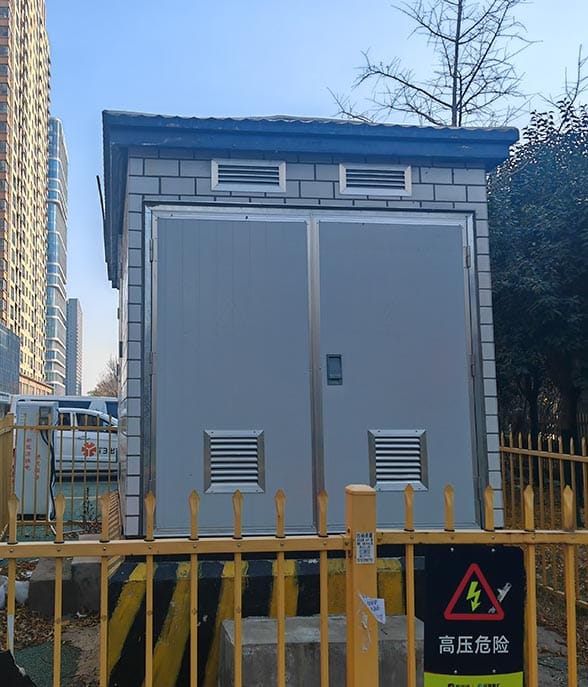
Working directly with a manufacturer can help project buyers get better control over configuration, quality, delivery communication, and technical support. A manufacturer can review the buyer’s requirements and recommend a design that fits the application instead of only offering a fixed catalog model.
For custom projects, this is especially important. The manufacturer can adjust the internal layout, cabinet structure, transformer capacity, protection system, and enclosure design according to the project’s needs.
A reliable manufacturer should be able to support the buyer from early selection to production confirmation and delivery. This includes technical parameter review, drawing confirmation, manufacturing control, factory testing, and shipment preparation.
For B2B buyers, the goal is not only to purchase one substation. The goal is to reduce project risk, improve installation efficiency, and ensure stable power distribution after commissioning.
الخاتمة
An America box mode محطة فرعية is more than a compact electrical cabinet. It is an integrated power distribution solution designed to help modern projects save space, reduce site work, improve installation efficiency, and support reliable operation.
For industrial facilities, commercial buildings, renewable energy projects, data centers, and urban distribution systems, the key to choosing the right substation is not simply selecting a capacity from a catalog. Buyers should evaluate voltage level, transformer capacity, load type, enclosure protection, environmental conditions, maintenance access, and future expansion needs.
As a manufacturer, the most important value is the ability to turn project requirements into a practical electrical solution. When buyers provide technical parameters, drawings, installation environment, and application details, a customized American box type substation can be designed to match real project conditions and support safer, more efficient power distribution.
الأسئلة الشائعة
What is an America box mode substation used for?
An America box mode substation is used for medium-voltage power receiving, voltage transformation, and low-voltage distribution. It is commonly used in factories, commercial buildings, industrial parks, residential areas, renewable energy projects, and outdoor power distribution systems.
Is an America box mode substation suitable for outdoor installation?
Yes. It can be designed for outdoor installation with a weatherproof enclosure, suitable protection level, ventilation, anti-corrosion surface treatment, and proper cable access. The final design should match the actual site environment.
What is the difference between an America box mode محطة فرعية and a pad-mounted substation?
The terms are often related in practical use. A pad-mounted substation usually refers to a ground-mounted compact distribution unit installed on a concrete pad. An America box mode substation may be used by some suppliers to describe an American-style compact or pad-mounted transformer substation.
What information is needed for a quotation?
Buyers should provide primary voltage, secondary voltage, transformer capacity, frequency, phase, application site, incoming and outgoing circuits, installation environment, enclosure requirements, and any technical drawings or standards.
Can the America box mode substation be customized?
Yes. A manufacturer can customize voltage, capacity, enclosure size, internal layout, protection devices, metering system, cable entry direction, surface treatment, and other project-specific requirements.