Table of Contents
As a low voltage switchgear manufacturer, our goal is not only to provide high-quality products but also to help buyers and engineers understand the technical requirements, standards, and selection criteria. This article is designed to guide you through the essentials of low voltage switchgear, including product types, standards, cost factors, and how to choose the right manufacturer for your project.
What Is Low Voltage Switchgear and Why It Matters

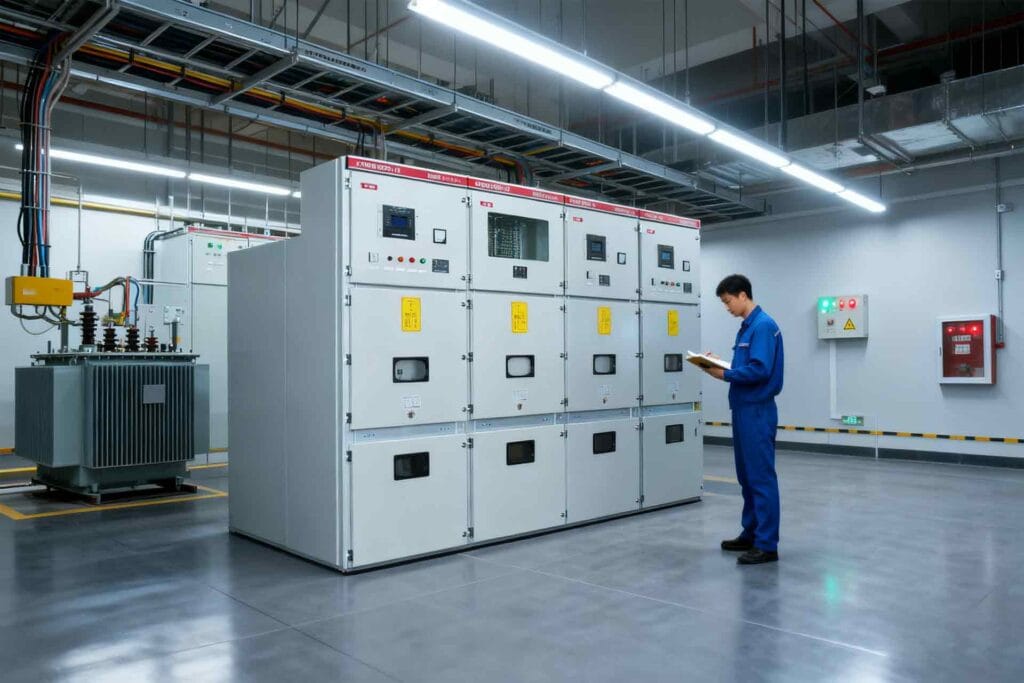
Low voltage switchgear is a key component in power distribution systems, typically used in electrical networks with voltages below 1,000 volts. It helps manage, protect, and control electrical circuits by using protective devices such as MCCB (Molded Case Circuit Breaker), ACB (Air Circuit Breaker), and vacuum circuit breakers.
Switchgear is commonly used in:
- Industrial plants and manufacturing facilities
- Commercial buildings and high-rise offices
- Data centers and telecom infrastructure
- Renewable energy projects such as solar farms and wind power stations
- Hospitals and critical facilities requiring reliable power distribution
Compared with a distribution board, switchgear provides higher protection levels, better safety features, and greater flexibility in system expansion. A well-designed switchgear system can significantly reduce downtime and improve electrical safety.
How to Choose the Right Low Voltage Switchgear Manufacturers
Selecting a reliable low voltage switchgear manufacturer is essential for ensuring long-term performance and safety. Here are key factors you should consider:
Manufacturing Capability and Production Capacity
As a manufacturer, we emphasize strict production processes and advanced assembly lines to ensure consistent quality. Look for manufacturers with:
- Modern production facilities
- High-capacity assembly lines
- Skilled technicians and engineers
- Strong R&D and design capabilities
Certifications and Standards Compliance
International standards such as IEC 61439, IEEE, CE, and UL are crucial. These certifications ensure that the switchgear meets safety and performance requirements. Choosing a certified manufacturer reduces the risk of failures and compliance issues.
Quality Control and Testing
Reliable manufacturers perform rigorous testing such as:
- Type tests
- Routine tests
- Performance tests
- Arc flash testing
These tests ensure that the switchgear can withstand short circuits, overloads, and harsh environments.
After-Sales Service and Technical Support
A professional manufacturer provides:
- Technical support during installation
- On-site guidance and commissioning
- Spare parts and maintenance services
- Warranty and after-sales care
Low Voltage Switchgear Manufacturers vs Suppliers: What’s the Difference?
Many buyers confuse manufacturers with suppliers. Understanding the difference is crucial when you plan your project.
Manufacturer Advantages
- Customization: Manufacturers can design and build switchgear according to your exact specifications, including custom dimensions, busbar configurations, and protection schemes.
- Cost Control: Direct manufacturing reduces intermediaries, lowering costs.
- Quality Control: Manufacturers can ensure consistent quality through direct production monitoring.
- Lead Time: Manufacturers can better manage lead times for custom orders.
Supplier Advantages
- Wide Product Range: Suppliers often offer various brands and products, which can be useful for quick procurement.
- Convenience: Suppliers can provide a one-stop purchasing solution.
To choose a genuine manufacturer, check factory audits, production photos, certification, and past project cases.
Key Standards and Compliance for LV Switchgear
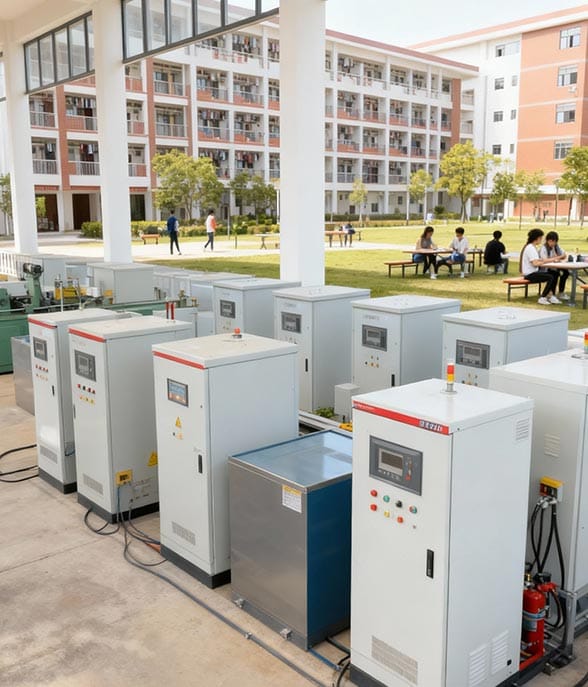
Standards and compliance are essential for safety and reliability. The most important standards include:
IEC 61439
IEC 61439 is the international standard for low-voltage switchgear and controlgear assemblies. It defines:
- Electrical performance requirements
- Short-circuit withstand capability
- Temperature rise limits
- Protection level requirements
Arc Flash Protection
Arc flash is one of the most dangerous electrical hazards. Reliable switchgear must include arc flash protection features such as:
- Arc-resistant structures
- Pressure relief vents
- Protective relays and sensors
Safety Standards for MCCB and ACB
High-quality MCCB and ACB are core components of low voltage switchgear. Choose manufacturers that use reputable brands or offer high-grade components with strong reliability and performance.
Compliance ensures that your system is safe, reliable, and meets local regulations.
Common Types of Low Voltage Switchgear Products
Low voltage switchgear is available in multiple configurations depending on the application.
Fixed Type vs Withdrawable Type Switchgear
- Fixed type: Economical, simple structure, widely used in general industrial settings.
- Withdrawable type: Modular design, easier maintenance, often used in power plants and critical facilities.
Indoor vs Outdoor Switchgear
- Indoor switchgear: Used in factories, buildings, and indoor substations.
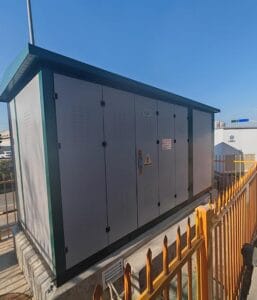
- Outdoor switchgear: Designed with weatherproof and corrosion-resistant features.
Metal-Enclosed vs Metal-Clad Switchgear
- Metal-enclosed: Common for standard applications with good safety.
- Metal-clad: Offers higher protection and reliability, suitable for high-risk environments.
Motor Control Center (MCC) and Power Distribution Units
MCC and distribution units are often integrated into low voltage switchgear systems to control motor loads and power distribution.
Top Features to Look for in LV Switchgear from Manufacturers
When choosing switchgear, look for the following features:
High Short-Circuit Withstand Capability
Switchgear must handle high fault currents without damage. This is essential for industrial and commercial applications.
Reliable Protection
Effective protection includes:
- Overload protection
- Short circuit protection
- Earth fault protection
- Overvoltage and under-voltage protection
Easy Maintenance and Modular Design
Modular design allows quick replacement and expansion, reducing downtime.
Intelligent Monitoring
Modern switchgear can integrate IoT and smart monitoring, allowing remote data collection and predictive maintenance.
Cost Factors: Why Low Voltage Switchgear Prices Vary
Prices vary due to many factors. Below is a cost comparison table for reference:
| Cost Factor | Impact on Price | Notes |
|---|---|---|
| Material quality (copper/aluminum busbar) | High | Copper busbar increases cost but improves conductivity and reliability |
| Protection components (MCCB, ACB, relays) | High | High-quality brands cost more but offer better performance |
| Customization | Medium to High | Custom sizes, special panels, and unique features increase cost |
| Certification and testing | Medium | IEC 61439 compliance and type tests add to manufacturing cost |
| Project scale | Medium | Large projects can reduce unit cost due to economies of scale |
| Delivery and logistics | Medium | Shipping and customs affect total cost |
Low Voltage Switchgear Applications and Case Studies
Low voltage switchgear is used across multiple industries. Here are common application scenarios:
Industrial Plants and Manufacturing Facilities
Switchgear is essential for powering production lines, motors, and heavy machinery. Reliability and safety are critical to avoid downtime.
Data Centers and Telecom
Data centers require stable power distribution and backup systems. Switchgear ensures consistent power and reduces the risk of outages.
Renewable Energy Projects
Solar farms and wind power plants require specialized switchgear for power conversion and distribution. Manufacturers must offer custom solutions to meet unique project needs.
Commercial Buildings and Hospitals
These facilities require reliable power distribution, emergency backup, and safety compliance.
How Manufacturers Ensure Quality and Reliability
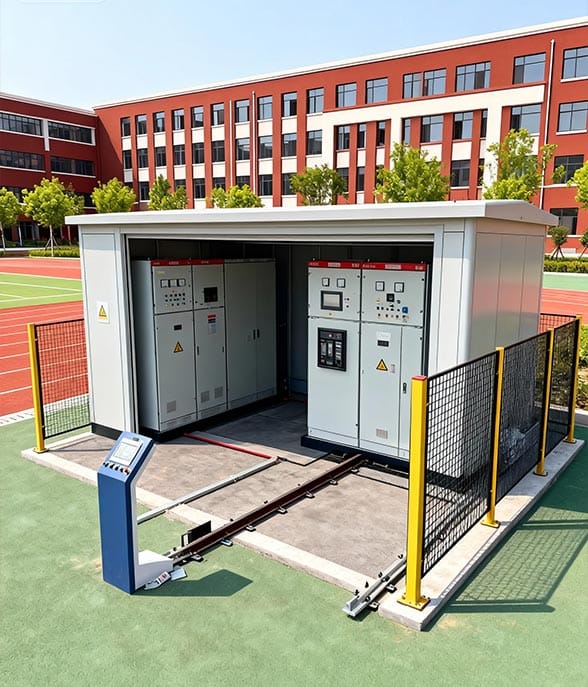
As a manufacturer, we focus on strict quality control and continuous improvement. Key quality processes include:
Raw Material Selection and Inspection
Only high-quality raw materials and components are used, and every batch is inspected before production.
Automated Production Line and Assembly Process
Automated production ensures consistent assembly quality and reduces human error.
Type Testing & Routine Testing
Every switchgear unit undergoes rigorous testing to ensure it meets performance and safety standards.
Warranty and Maintenance Support
Manufacturers provide warranties, spare parts, and technical support to ensure long-term performance.
Conclusion
Choosing the right low voltage switchgear manufacturers is crucial for ensuring safety, reliability, and long-term performance. As a professional manufacturer, we provide high-quality LV switchgear with full compliance to international standards such as IEC 61439, along with strong customization capabilities, strict quality control, and reliable after-sales support.
If you are looking for a trusted low voltage switchgear supplier or need a customized switchgear solution, feel free to contact us for consultation and quotation. Our experienced engineering team can help you design the best solution for your project needs.
FAQ
Q1: What is the difference between LV switchgear and MCC?
A: LV switchgear is used for power distribution and protection, while MCC focuses on motor control and protection. Both can be integrated into one system.
Q2: How to check if a manufacturer is reliable?
A: Check certifications (IEC 61439, ISO), factory audit, production capacity, testing records, and past project cases.
Q3: What is IEC 61439 and why is it important?
A: IEC 61439 is the international standard for low voltage switchgear assemblies. It ensures safety, performance, and reliability.
Q4: How long is the typical lead time for custom switchgear?
A: Lead time depends on complexity and quantity. Typically it ranges from 4 to 12 weeks.
Q5: What is the difference between fixed and withdrawable switchgear?
A: Fixed type is economical and simple, while withdrawable type offers easier maintenance and better modularity.